
 1 month ago
53
1 month ago
53
ARTICLE AD BOX

 Reuters
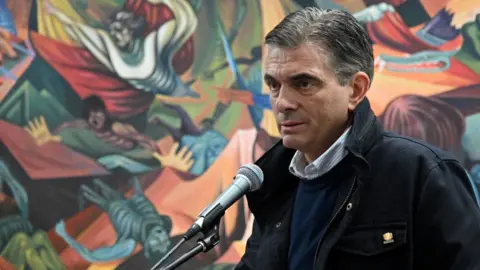
President Rodrigo Paz says weeks of protests have been used to destabilise the country
Bolivian President Rodrigo Paz has declared a state of emergency after weeks of protests demanding his resignation.
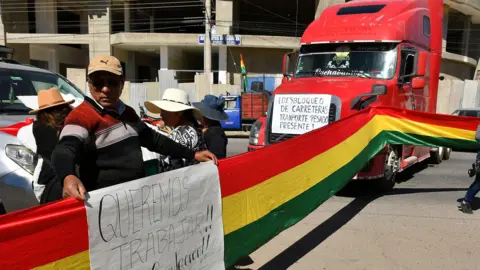
The move would give Paz broader powers to clear road blocks by demonstrators, which have caused serious shortages of basic goods and paralysed large parts of the nation.
In a statement, the president said the state of emergency would "free the country's roads" and "restore" normalcy.
Under law, Bolivia's Congress must approve or reject the measure within 72 hours of the declaration.
The blockades, led by miners, farmers and indigenous groups, are part of protests which started at the end of April.
Several people have died and hundreds have been arrested during the unrest.
Protest groups are calling for fuel subsidies to be reinstated and a rollback of austerity measures, as well as demanding Paz's resignation.
The president has said the crisis is an organised attempt to destabilise the country.
"Bolivians cannot continue to be hostages of blockades that prevent working, studying, receiving medical attention, supplying themselves, and bringing sustenance to their homes," he said in a social media post on Saturday.
Paz's announcement came hours after he unveiled that a deal had been struck with the country's main union, the Bolivian Workers' Confederation.
However, some Indigenous groups have said they will continue to protest, AFP reported, with roadblocks remaining in place.
Journalists reported seeing police and military personnel in main squares on Saturday.
 EPA
EPA
Road blocks have heightened shortages of fuel and other basic supplies around the country
Protests started at the end of April, triggered by a land reform proposed by Paz. Critics argued the proposals would make it easier for large landowners to buy up small properties.
Paz has since scrapped the reform. But farmers have been joined by other groups venting grievances over other measures, like cuts to long-standing fuel subsidies.
There has also been backlash to proposed changes to Bolivia's constitution.
The president, a centre-right politician elected last October, says these are needed to open up the economy to private investment. But demonstrators argue the changes would undermine oversight of natural resources and other key economic areas.
Paz has accused the left-wing former president, Evo Morales, of orchestrating the protests, which the ex-leader has denied.
Paz has tried to defuse the widespread protests by reshuffling his cabinet, slashing his salary and that of his ministers in half, and announcing the creation of a council to negotiate with sectors of society which feel isolated under his government.
But so far these measures have failed to quell the unrest.
Last month, Congress passed a bill which would make it easier for the president to declare a state of emergency and deploy soldiers to quell protests.




 English (US) ·