
 2 months ago
76
2 months ago
76
ARTICLE AD BOX
21 minutes ago
Divya Talwar, Marthe de Ferrerand Amy Johnston,BBC News Investigations
Undercover filming reveals baby sleep advice given by Alison Scott-Wright
Some self-described infant sleep experts are giving advice that could put babies at risk of serious harm and even death, medical professionals have told a BBC investigation.
We secretly filmed one of them advising our reporter to put a newborn to sleep on its front, a practice proven to significantly increase the risk of sudden infant death syndrome (Sids).
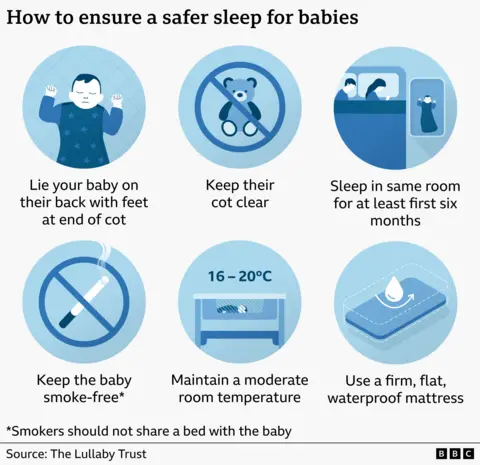
The NHS advises to "always place your baby on their back to sleep" in their own sleep space, like a cot, for the first 12 months to reduce the risk of Sids. The mattress should be firm, flat and waterproof.
A second self-defined expert recommended placing towels in the infant's cot - a practice The Lullaby Trust, a baby safety charity, says also increases the risk of Sids and "accidental death".
Medical professionals who watched our undercover footage said moments had left them feeling "sick" and "horrified".
Infant-sleep consulting is a growing unregulated industry, they say, fuelled by limited post-natal support for new parents. And while they acknowledge many individuals provide valuable and safe sleep advice, they warn there is also a "dark side".
Baby "sleep experts" are popular on social media and members of our investigation team have also had first-hand experience of the sector.
Dozens of parents have raised concerns with the BBC.
Many of them flagged two women who they had paid for "consulting" advice - Alison Scott-Wright and Lisa Clegg. Both have large Instagram followings, celebrity endorsements and published books.
- Have you been affected by the issues raised in this story? Contact Divya and the team at: ParentingInvestigation@bbc.co.uk
The advice given by Scott-Wright in one consultation was "really cruel", one new mother told us.
Another who spoke to Clegg about her two infants, born several years apart, said she regretted having put her "young babies in danger" by following advice to place multiple muslins and other loose items in their cots.
Scott-Wright told the BBC her support and advice had "helped a multitude of babies, children, parents and families". She said she took "infant safety and the well-being of families extremely seriously".
Clegg said she had "successfully advised thousands of parents" on sleep and routines and none of the advice has ever been "dangerous or put babies at risk".
We sent a reporter undercover, booking online consultations with both women while posing as the mother of a nine-week-old newborn, whose baby was waking frequently at night.
This age is within the one-to-six-month range where most cases of Sids occur.
Previously known as cot death, Sids is the sudden and unexplained death during sleep of an otherwise healthy baby aged up to 12 months.
In 2022, the latest year with complete figures, there were 197 unexplained deaths of children under the age of one in England and Wales, 16 in Scotland and two in Northern Ireland.

With no regulation, anyone can call themselves a sleep expert. Scott-Wright and Clegg also work as self-described "maternity nurses" - a role involving hands-on work with infants that is also unregulated.
Health Secretary Wes Streeting has said the government plans to close this loophole across the UK, by restricting individuals from using the term "nurse" to describe themselves, unless they are appropriately qualified.
It follows an inquest into the death of football manager Steve Bruce's four-month-old grandson Madison Bruce Smith. A coroner concluded the baby had died, "whilst asleep in his cot having been placed prone in an unsafe sleep position" by someone who described themselves as a maternity nurse.
Streeting told the BBC that "dangerous misinformation dressed up as expert advice is putting babies' lives at risk - and it must stop".
The Bruce Smith family is calling for further regulation and "mandatory training" for all individuals who provide paid sleep care for babies and infants.
"No parent should ever have to question whether the person they have trusted to care for their baby is truly qualified," they told the BBC.
When first-time mother Emily's baby was four months old, he began waking hourly at night, leaving her feeling "pretty broken".
After scrolling through sleep advice on Instagram, one name appeared repeatedly - Alison Scott-Wright, also known as the "Magic Sleep Fairy".
Scott-Wright has thousands of followers on Instagram, has appeared on ITV's This Morning and has a book published by Penguin Random House, which appears to have been endorsed by celebrity parents, including actress and parenting podcaster Giovanna Fletcher.
In a statement, ITV said Scott-Wright had appeared as a guest on This Morning once in 2024 as a sleep specialist for babies and children. Penguin Random House and Fletcher did not respond to the BBC's request for comment.
Emily, who paid more than £500 for a video consultation, says she was told by Scott-Wright that her son was suffering from severe reflux and in constant pain.
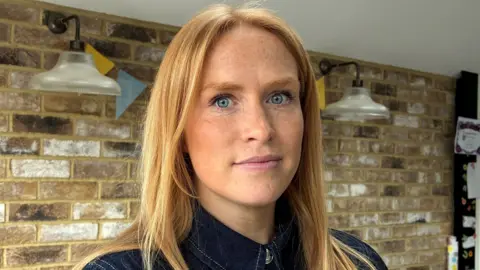
First-time mother Emily got baby sleep advice from Alison Scott-Wright
Scott-Wright suggested placing him to sleep on his front, says Emily, and that she should medicate her son for reflux - despite Scott-Wright not seeing the baby during the consultation.
"It felt scary that someone had medically diagnosed my child and guided me to do things that go against guidance."
She was also advised by Scott-Wright, she says, to stop breastfeeding and to use formula instead - something she was not keen to do. At no point, says Emily, did Scott-Wright tell her to consult a medical professional.
Scott-Wright told the BBC she has "never claimed to be a medical doctor" and her role with families is "complementary to - not a replacement for - medical advice from qualified healthcare professionals".
Emily didn't follow any of Scott-Wright's advice, but some parents have told us that, when they were "desperate" and "vulnerable", they did follow her advice that was against NHS guidance.
We paid for a video consultation with Scott-Wright ourselves.
The scenario we presented her with was based on our undercover reporter's real-life experiences with her own daughter two years ago.
Our reporter described the case of a healthy, breast-fed baby with good weight gain, who was struggling to sleep.
Despite sleep being the only concern raised, Scott-Wright told our reporter there may be a "digestive issue" and suggested several diagnoses including cow's milk protein allergy (CMPA), tongue-tie, reflux and laryngomalacia (floppy larynx).
She also advised "it would be prudent" for our reporter to consider removing dairy from her diet, without telling her to seek medical advice first.
At no point was Scott-Wright shown a baby.
During the consultation, Scott-Wright told our reporter she had been a midwife but no longer had a licence to practise, adding "there is no qualification that anyone could have for what I do".
We showed our undercover footage to two medical professionals - NHS midwife and international board-certified lactation consultant (IBCLC) Olivia Hinge and NHS paediatrician Dr Lillie Parker.
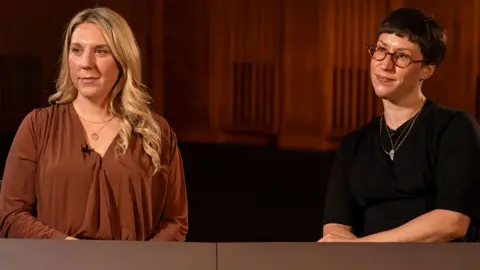
Dr Lillie Parker and Olivia Hinge reviewed the undercover footage
Both said none of the diagnoses Scott-Wright had suggested matched the symptoms described by our reporter. They also noted repeated instances where Scott-Wright had made inaccurate medical claims.
"She's choosing to give health advice she's not qualified to give," said Hinge.
Nearly half-an-hour into our call with her, Scott-Wright broached the idea of placing our reporter's newborn to sleep on her front, describing it as "a game-changer".
"I can't tell you to do this, but every baby I work with sleeps on its front," said Scott-Wright. "I never do back sleeping, I don't agree with it."
The most consistent finding of Sids research worldwide, over decades, is that front sleeping "significantly increases the chance of your baby dying suddenly and unexpectedly in those first few months", according to leading infant-sleep academic Prof Helen Ball, director of the Durham Infancy and Sleep Centre.
The government's Back to Sleep campaign was launched in 1991 by The Lullaby Trust and journalist Anne Diamond, who had lost her son to Sids that same year.
In the preceding years, more than 1,000 babies a year were dying unexpectedly in England and Wales, with no discernible cause found. That figure fell by 81% in the first 25 years of the campaign and has continued to decline since.
Scotland and Northern Ireland have seen similar drops. Both nations record their data differently to England and Wales.
However, we recorded Scott-Wright saying that back-sleeping advice was "one of the biggest travesties of modern-day parenting".
NHS paediatrician Lillie Parker told us: "This is fundamentally the most dangerous thing she has said. We're not talking about mild harm here… We're talking about a baby having cot death."
During the consultation, Scott-Wright did say multiple times "I can't tell you to do this" when introducing the idea of front sleeping.
But Parker says this doesn't negate the danger of her message.
"She keeps reiterating she can't give this advice, and yet she is very forcefully saying actually this is the advice I'm giving you."
During the call, Scott-Wright acknowledged that front sleeping might fill our reporter with "fear" but went on to suggest placing a breathing sensor under the mattress - claiming: "Then it doesn't matter what position they sleep in."
The Lullaby Trust told us there is no evidence such monitors reduce instances of Sids and they "cannot be relied upon to make front sleeping safer".
Introducing this idea to a parent "is really dangerous", says Parker. The monitors work as alarms to signal if a baby has stopped breathing, she says, meaning they "only pick up really the worst-case scenario". By which point a parent is already "in a pretty terrifying position".
We approached Scott-Wright after our undercover filming. She told us most families who sought her advice had already been to the NHS and private health professionals but had not been "afforded sufficient guidance or resolution" regarding concerns about their babies.
Her role was to support parents navigating these challenges "alongside - not instead of - medical advice", she said. Scott-Wright did not respond to our questions on front sleeping.
Our reporter spoke to Lisa Clegg in a 50-minute phone call about baby sleep
Our investigation also uncovered potentially harmful advice from Lisa Clegg, known online to her nearly 100,000 Instagram followers as the "Blissful Baby Expert".
Our undercover reporter presented the same scenario that had been discussed with Scott-Wright.
Clegg charged £200 for an initial 50-minute phone call and a month of ongoing support via email and text messages.
Although she did not promote front sleeping and acknowledged her qualifications are not medical, she did advise other practices that go against NHS safer-sleep guidance.
She suggested placing a muslin and rolled-up towels in a newborn's crib, saying any fabric should be kept "well away" from the baby's face.
A "rolled-up" towel either side of the newborn's waist "under her arms" while asleep, said Clegg, would make the baby "feel like she's still squished" in the mother's arms.
Later in the call Clegg mentioned them again: The towels will also "keep her in position as well, so she can't roll".
Multiple parents had shared photos with us which, they said, Clegg had sent them as guides of how to do this. The images showed babies with towels and multiple muslins surrounding the infants' heads and faces.
We asked Clegg for visual examples during our call with her, and she later sent photos showing two young babies in their cots, with loose items surrounding them, including close to their faces.
One infant was sleeping on its side wedged between two rolls of fabric with another behind its head - this is "how one parent did it", said Clegg. The other photo appeared to show a tiny baby on its back surrounded by five pieces of fabric.
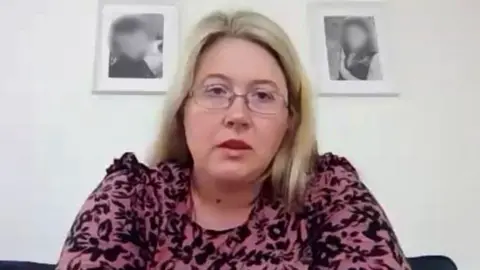
Lisa Clegg sent us example photos of babies sleeping
Both our undercover recordings were also reviewed by Prof Ball - who also advises The Lullaby Trust.
Ball and the medical professionals told us what was shown in the photographs was unsafe and "shocking", with increased risks of asphyxiation and overheating.
"It's really hazardous to have loose items like rolled-up towels. Babies can easily grab them and cover themselves with them... which is an overheating and breathing hazard," said Ball.
Clegg has responded to the BBC saying she is not aware of any families "raising concerns" about her having given "unsafe" advice - and that parents come to her because of "lack of support" from the NHS.
She adds that although "there are guidelines for parents... that is all they are and everyone is free to choose what parts they follow and what they choose to ignore or do differently".
The lack of qualifications or training needed for someone to refer to themselves as a "sleep expert" or a "maternity nurse" - combined with no regulation - is deeply concerning, said all our medical professionals.
Lullaby Trust CEO Jenny Ward says greater regulation would make sure "safe, consistent and evidence-based practices" are followed. Any advice going against guidance should be "treated with extreme caution", she adds.
Emily's son is now nine months old and "thriving".
"I have a really happy, interested little boy who is doing what a little one should be doing."




 English (US) ·