
 3 months ago
75
3 months ago
75
ARTICLE AD BOX
Esme StallardClimate and science reporter

 BBC
BBC
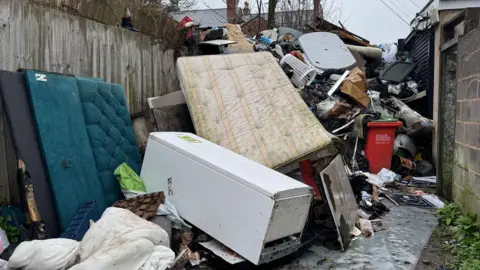
Local authorities in England may soon have new powers to force fly tippers to clean up waste they have dumped and pay fines without having to go through the courts.
The proposal, announced on Wednesday, is one of a number of government initiatives to tackle rising waste crime as part of a new action plan expected on Friday.
The Environment Agency (EA), which regulates waste, said that it had found 749 new illegal waste sites in 2024-2025, double the year before.
Fly tippers could face 20 hours of community service to clean their illegal dumps, and fines up to £300 for the offence. But the Local Government Association said councils must be fully resourced to carry out this new enforcement.
"If you dump rubbish on our streets, you will be joining a clean-up squad and picking up the bill, not the taxpayer," said Environment Secretary Emma Reynolds.
"The government is handing both the Environment Agency and local authorities the power to boost waste crime enforcement, hand out tougher sentences and tackle illegal dumping faster," she added.
The government also recently announced that drivers caught fly tipping could be given penalty points on their licence and the Environment Agency could gain police style powers to search premises without a warrant and arrest those suspected of fly tipping.
The new proposals come after rising levels of waste crime have been seen across the country and increased reports of "super sites" which contain tens of thousands of tonnes of rubbish.
In January, a BBC investigation identified 11 of these sites, including one in Gloucestershire that residents said had seen up to 50 vehicles deliver rubbish every day at its peak.
The new proposals - first reported in the i newspaper - could see councils issue conditional cautions without having to take offenders to court, in an effort to speed up enforcement.
Under a caution offenders could be made to complete 20 hours of unpaid work clearing up streets and parks where they had dumped waste illegally, and pay fines up to £300.
If the caution is breached, then councils would still have the option to pursue a conviction in the courts.
Councils already have the power to issue on the spot penalties of £150 for littering, and the uplift is unlikely to make a dent in super sites which can cost millions to clean up.
But Mary Creagh, the nature minister, said the new powers would be for tackling smaller sites whilst enforcement for sites greater than 20,000 tonnes would be dealt with by the Environment Agency.
Tim Farron, Liberal Democrat spokesperson for the environment, said it was "only right that those who litter are made to pick up their waste".
But he added: "We need to target the professional gangs behind large-scale dumping - with the National Crime Agency taking over the investigation. It's time for serious enforcement and a long term strategy - not just another quick fix."
The government will be consulting with councils before introducing the change, and the move was cautiously welcomed by the Local Government Association (LGA).
Arooj Shah, Chair of the LGA's Neighbourhoods Committee, said: "Councils want to work with government to tackle the scourge of fly tipping and protect our communities from environmental crime."
According to government figures from the year 2024 to 2025, councils in England dealt with 1.26m fly-tipping incidents, of which 62% involved household waste.
But she added that councils must be "properly resourced and supported" to implement the cautions and the government needs to strengthen court fines.
"Sentencing guidelines must be reviewed so punishments properly reflect the seriousness of the offence and the harm it causes to communities," she said.
Any fines are only effective if the fly tippers can be identified. Local police and crime commissioners have previously raised the challenges of trying to catch waste criminals who work across county borders.
Most sites are in countryside locations on what should be agricultural land.
NFU vice-president Robyn Munt said he hoped tougher powers could "act as a deterrent" to criminals.
But he added: "Only 1 in 1,000 fly-tipping incidents are prosecuted by the police. It's vital further measures are put in place to catch waste criminals in the first instance, including a simpler mechanism to report fly tips."
Last month, the government announced it was doubling the Environment Agency's Joint Unit for Waste Crime's annual budget for this year to £15.6m to increase arrests.
The Environmental Services Association estimates the cost to the economy to tackle the waste was around £1bn a year in England.







 English (US) ·