
 1 hour ago
6
1 hour ago
6
ARTICLE AD BOX
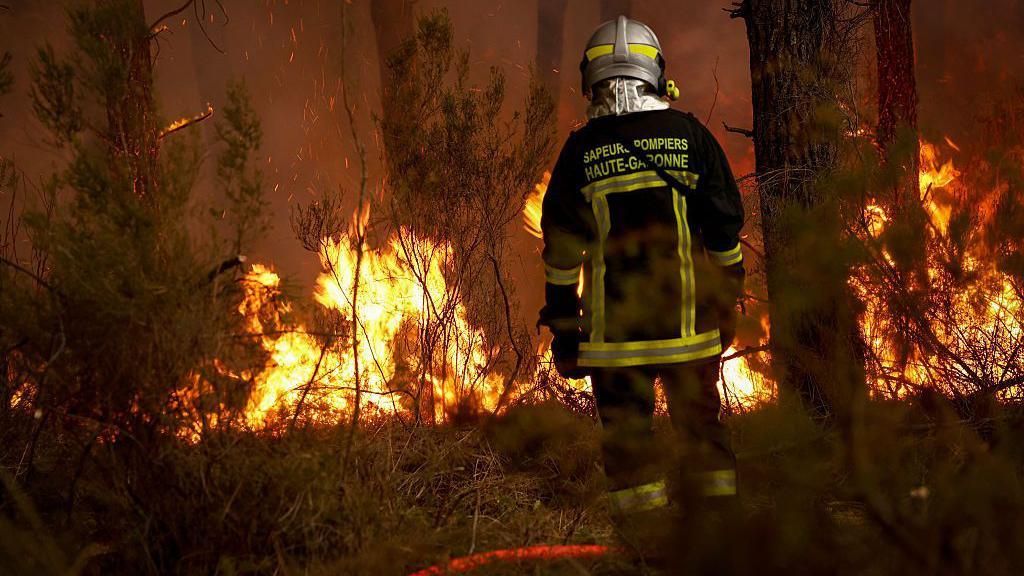 Image source, AFP via Getty Images
ByMitchell Labiak
Business reporter
Wildfires in Spain and France have caused mass evacuation and disruption, with more than 300,000 people forced to leave their homes and many sleeping in sports halls and other temporary shelters.
An official from one of the French departments affected by the fires has pleaded with visitors to stay away.
On Sunday, Sophie Brocas, prefect of the French department of Gironde, said, "I urge tourists not to come," while advising those already there to consider an alternative destination.
For those who have upcoming holidays to the affected regions, here is what you should know about how it might impact your plans.
Should I travel to France or Spain right now?
The UK government has not specifically warned against travel to anywhere in France or Spain, but it does advise caution.
In France, it says access to affected areas may be restricted and roads may close at short notice. It adds that further evacuations may take place.
It has also issued a general warning about the high risk of wildfires in France during the summer season from April to October.
For those in an affected area in France or Spain or planning to travel there, the UK government recommends following instructions and updates from local authorities and emergency services at all times.
Those needing emergency help in France or Spain can call 112.
Travellers should also bear in mind the UK government's advice can and does change in response to moving events.
Anna-Marie Duthie, travel insurance expert at financial rating firm Defaqto, says that if this happens after you have booked your trip, "you may be covered for cancellation or curtailment".
"You may also be covered for additional travel and accommodation costs should your trip be disrupted due to a catastrophic event, if your insurer offers this cover or you've paid to include it," she adds.
To know if this applies to you, check your policy.
Where are the wildfires burning?
The UK government says parts of Gironde and Landes in the south west of France are affected.
The official French wildfire map gives Gironde and Pyrénées-Orientales its highest fire alert level. Meanwhile, Aude and Var have its second highest alert level.
As of Monday, the map says there are 13 fires burning across the country, including on Corsica.
In Spain, authorities have declared a national emergency because of wildfires in parts of Madrid and Ávila. The UK government says there are also reports of wildfires in other inland areas of Spain.
Does travel insurance cover wildfires?
Once again, the answer depends on your policy.
"If your travel plans are disrupted by a wildfire and your policy includes trip disruption cover then travel insurance may cover some of the resulting costs," says Chris Bose, director of general insurance policy at the Association of British Insurers (ABI).
However, only half of travel insurance policies have "catastrophe" cover, according to analysis from Defaqto.
This means that, in many cases, travellers might not be covered by their insurance in the case of wildfires.
To know if this does or does not apply to you, speak to your insurer or check the wording of your policy.
What should I do if my airline or accommodation cancels my booking?
In the case of cancelled flights or accommodation, Bose recommends seeking refunds from your airline, tour operator or accommodation provider in the first instance.
Duthie says if your airline cancels your flight due to wildfires then "they should offer you the chance to rebook, or provide a full refund".
She says if your holiday was booked as a package then this refund should cover "all elements", including flights, accommodation and transfers.
"But if you've booked everything separately, you'll need to deal with each provider independently. Your airline may refund your flight, but your accommodation provider may not if the property is unaffected."
Should I just cancel my trip now?
Check what your insurance policy says about flights, accommodation or trip bookings first.
Rory Boland, editor of Which? Travel, says this is especially true for those not due to travel in the next week or two.
"Travellers who cancel now will likely forfeit their right to a refund or rebooking," he says.
As the UK government has not warned against travel to anywhere in the two countries, he says travellers are "unlikely to be able to claim on their travel insurance".
"As a rule, insurance firms won't make allowances for 'disinclination to travel'," Boland says.
"Instead, holidaymakers should wait until closer to the departure date to see if the holiday can go ahead or what flexible booking options are offered from the tour operator or airline.
"Travel companies will be prioritising anyone due to depart in the next couple of days."
How will climate change affect travel insurance in the future?
The amount of land burned by wildfires across Europe has increased by 57% since summer 2022, according to the World Health Organization.
It adds that climate change is intensifying wildfires and increasing their frequency.
Duthie says insurance firms are adapting to "potential new and increasing risks involved in travel as a result".
In the near term, she says it is unlikely insurance providers will change their policies.
"Current clauses may refer to 'severe' or 'extreme' weather, but the definitions for these can vary and currently no providers go as far as to specify criteria such as maximum temperatures."
However, she says that "longer term there is a chance that we may end up seeing less insurable destinations and increased premiums".







 English (US) ·