
 1 month ago
64
1 month ago
64
ARTICLE AD BOX

 Getty Images
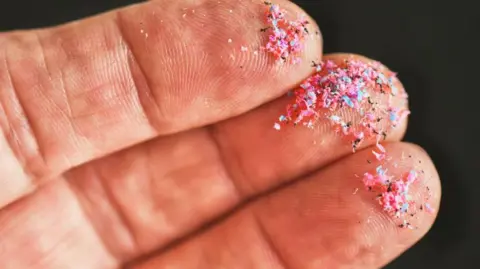
Researchers say they are still discovering the "scale and complexity" of microplastic pollution within the Thames
A new study into microplastic pollution in the River Thames has been launched by researchers at the University of East London (UEL) in an attempt to influence environmental policy and water quality.
The project, led by Dr Ria Devereux from the university's sustainability research institute, will gather data from locations stretching from Teddington in south-west London to Southend-on-Sea in Essex.
The samples will be assessed to see how pollution levels are changing and what impact climate pressures may be having on the river system.
Devereux said: "The River Thames is one of the most internationally recognised urban rivers in the world, yet we are still learning about the scale and complexity of microplastic pollution within it.
"This project is about providing robust scientific evidence that can support better environmental decision-making and help policymakers understand where interventions may be needed most."
The research should indicate whether pollution has gone up or down and if the water quality needs to improve.
Three litres of surface water will be collected from seven publicly accessible riverside locations along the Thames - Teddington, Westminster, St Katharine Docks, Limehouse, North Woolwich, Tilbury and Southend - before being filtered at a laboratory to capture tiny particles.
The filters are then examined under a microscope, where researchers look for suspected microplastics and record their size, colour and shape.
Representative particles are then analysed using Fourier-transform infrared spectroscopy (FTIR), which allows the team to identify the material and confirm whether the particles are plastic and, if so, what type they are.
The work helps build a picture of microplastic pollution levels along the Thames and how they may change over time.
 Getty Images
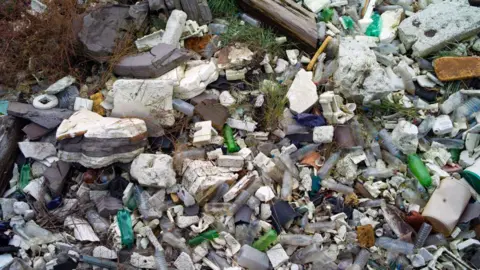
Plastic waste can affect wildlife and water quality
The study will also examine how storm activity and changing environmental conditions may influence microplastic levels across the river system.
Alongside scientific analysis, the project will produce policy briefings and bring together regulators, environmental organisations and policymakers through a dedicated stakeholder workshop hosted at UEL's Royal Docks Centre for Sustainability.
There are several definitions. One widely used approach defines microplastics as any fragment of plastic that is less than 5mm - about the width of a wedding band.
- Where do microplastics come from?
Primary microplastics are those like the microbeads intentionally added to face washes and other personal care products.
But most microplastics come from the slow disintegration of larger plastic products, including plastic wrap, takeaway containers, polyester clothes, tyres, paint and artificial turf. These are known as secondary microplastics.
- How common are microplastics?
Very. They are found in water, soil and the air. According to one estimate, 2.7 million tonnes of microplastics seeped into the environment in 2020, an estimate expected to double by 2040.
- How do microplastics get into the environment?
There are several ways. Over time discarded plastic products – such as water bottles and clingfilm – can break down into microplastics. Synthetic fabrics like polyester can shed microplastic fibres when they are washed. Microplastics also get released into the environment when people use products laced with the particles.
- Why are microplastics potentially a problem for people?
Microplastics can enter the human body through ingestion and inhalation. It remains to be confirmed if nanoplastics – which are less than one micrometre across – may even slip through the skin, as some research suggests.
- Are microplastics damaging to plants, animals and the wider environment?
One study found they can slow the growth of a microscopic marine algae known as phytoplankton, the base of several aquatic food webs.
Another report found microplastics can make soil less fertile, hampering harvests.
Microplastics may speed the melting of snow and ice in places such as the Arctic, limiting the planet's ability to reflect sunlight and speeding global warming, one study suggested.
Source: United Nations Environment Programme







 English (US) ·