
 2 hours ago
7
2 hours ago
7
ARTICLE AD BOX
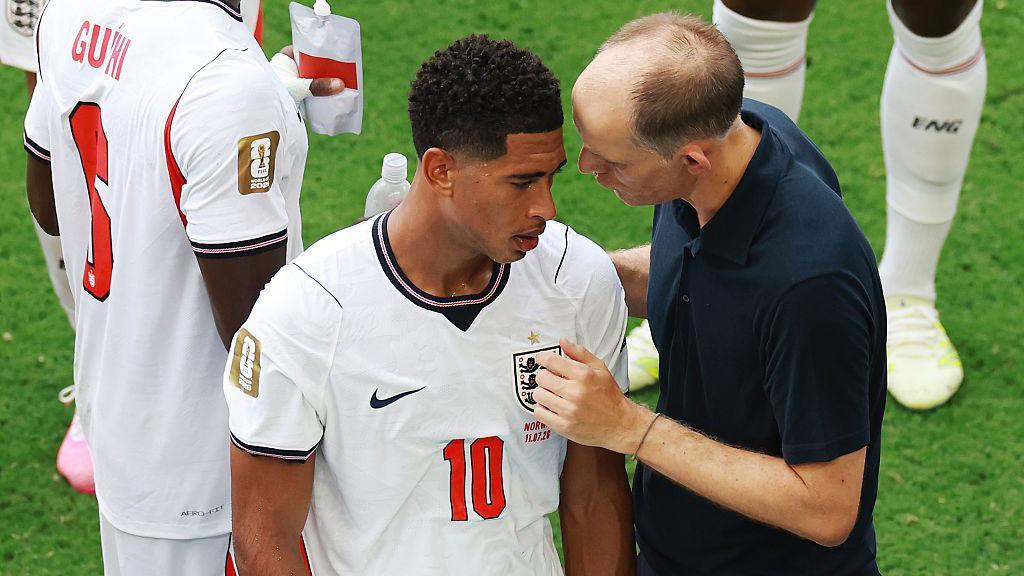 Image source, Getty Images
Bellingham was England's hero again on Saturday, scoring twice in the quarter-final win over Norway
By
Football tactics correspondent
England fought hard to beat Norway in the World Cup quarter-final on Saturday, but manager Thomas Tuchel is clearly concerned.
"We made life very difficult for ourselves," Tuchel said. "The result is fantastic but I'm not happy with the performance."
He did follow these quotes up by commending the players for their heart: "I'm impressed with the effort, team spirit and belief to overcome adversity.
"But I am also a football coach and I think we can play better. We had a lot of momentum swings for both teams. We made life difficult in the way we played, sloppy, a lot of technical mistakes, not fast enough, not repetitive enough."
So, what did he want to see? And more importantly, if the side aren't playing as they should be, why do they keep on winning?
How does Tuchel want England to play?
When Tuchel selected his World Cup squad, it was clear that he had a specific style of play in mind.
Players were selected based on how well they could perform in predefined roles – think Jude Bellingham and Morgan Rogers competing for the number 10 shirt pre-tournament.
These fixed roles are underpinned by a number of key principles, some of which are:
Dominate possession
Press aggressively
Play deliberate passes to entice opposition pressure
After enticing pressure, accelerate play, looking to find forwards in space
Against defensive blocks, attack down the flanks, using wide triangles and rotations to create chances
Througout the World Cup we have seen these in glimpses, but Tuchel is unsatisfied.
What did Tuchel want to see against Norway?
Almost all of the issues Tuchel mentioned after the game were about how his side played on the ball, so for context, we need to look at England's attacking and Norway's defensive set-up.
Stale Solbakken's men defended in a 4-5-1 shape, blocking space, with England attacking in a 3-2-5 shape on the ball.
Marc Guehi, John Stones and Ezri Konsa made up the first line. Declan Rice and Elliot Anderson formed the two in midfield. Left-back Nico O'Reilly joined the front four, giving them an extra player against Norway's back line.
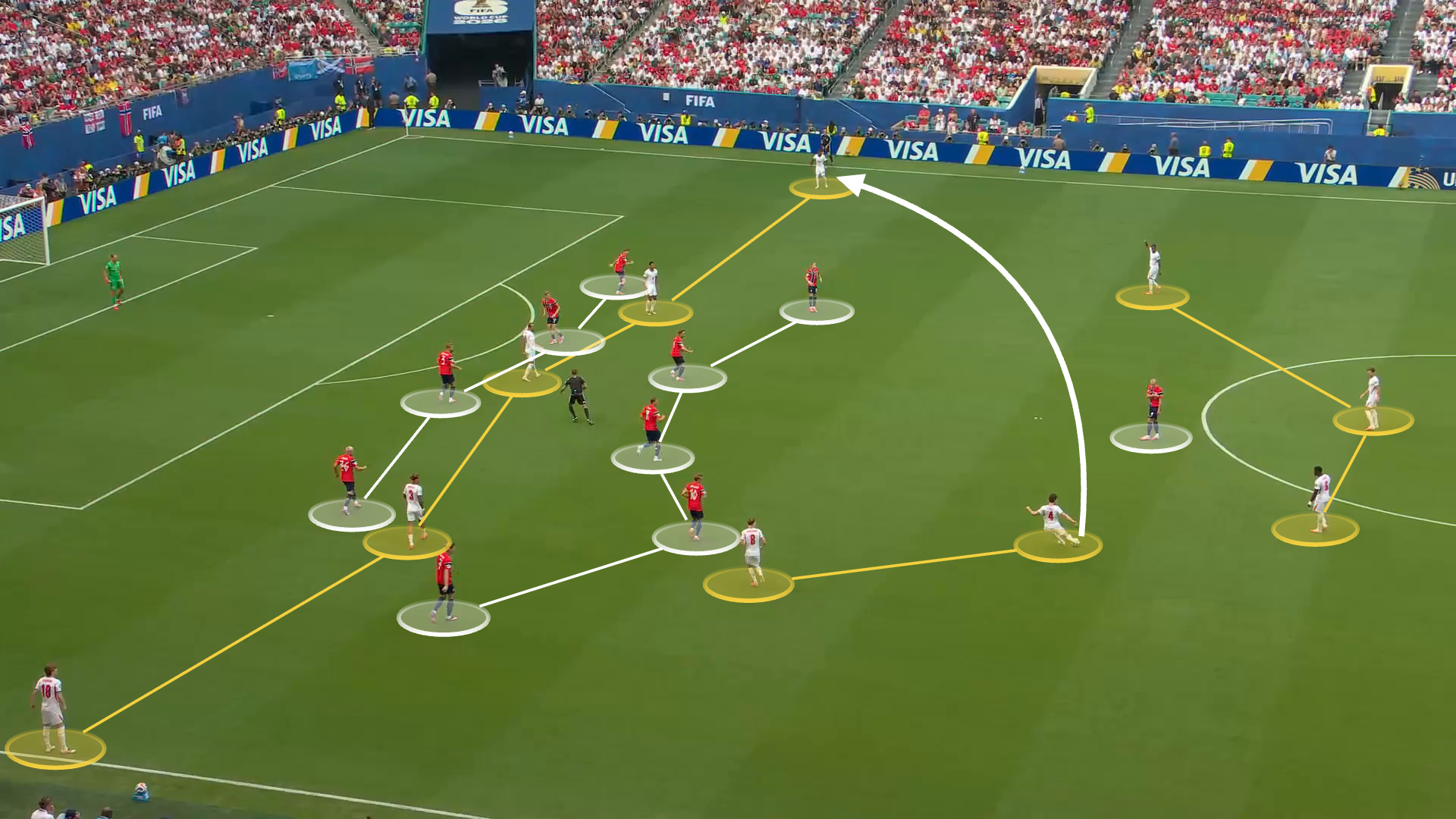
England's 3-2-5 attacking shape against Norway's 4-5-1
In his post-match critique Tuchel said England were "not repetitive enough", an uncommon phrase.
What he was most likely referring to was that he did not see his side have longer spells of possession consisting of lots of short passing, aimed at drawing Norway out.
This is something the German manager wants because it opens up space to find attackers in, either out wide or with long balls over the top.
In the group stage against Ghana, who also defended in a 4-5-1 block, Tuchel was heard telling his players to play "short, short, short" before looking for a "long switch", something we actually saw from England in the first quarter against Norway.
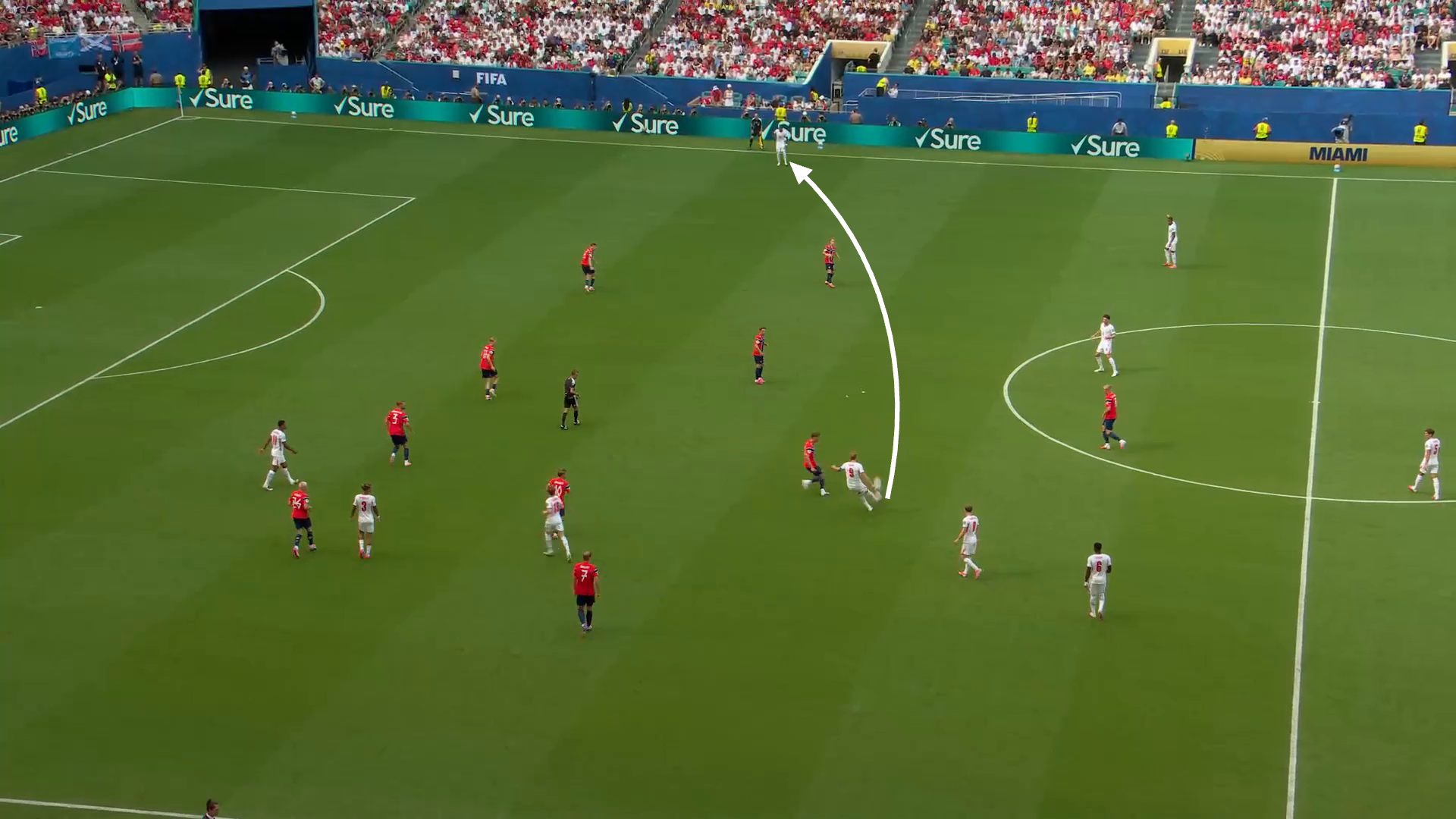
In the 10th minute, England have six players on the left side of the pitch. With Norway drawn in that direction, Kane then switches play to find Madueke free, ready to dribble at his full-back one against one
By playing numerous short passes on one flank, England drew the Norwegians towards the ball before quickly playing to the far-side winger in space, often Anderson playing long to Noni Madueke.
The wingers didn't capitalise on these moments but England showed glimpses of Tuchel's ideal attacking principles.
As the game went on, this repetitive baiting of pressure was seen less.
England struggled to hold the ball, with their first-half possession of 68% dropping to 44% in the second half.
The untapped potential of England's wide triangles
Positional rotations in the wide triangles for Tuchel were supposed to be the key attacking tactic England were to lean on throughout the tournament.
Much of Tuchel's post-match frustrations likely will have come from the fact that Norway's 4-5-1 gave the Three Lions the perfect conditions to use them, but England were "not fast enough".
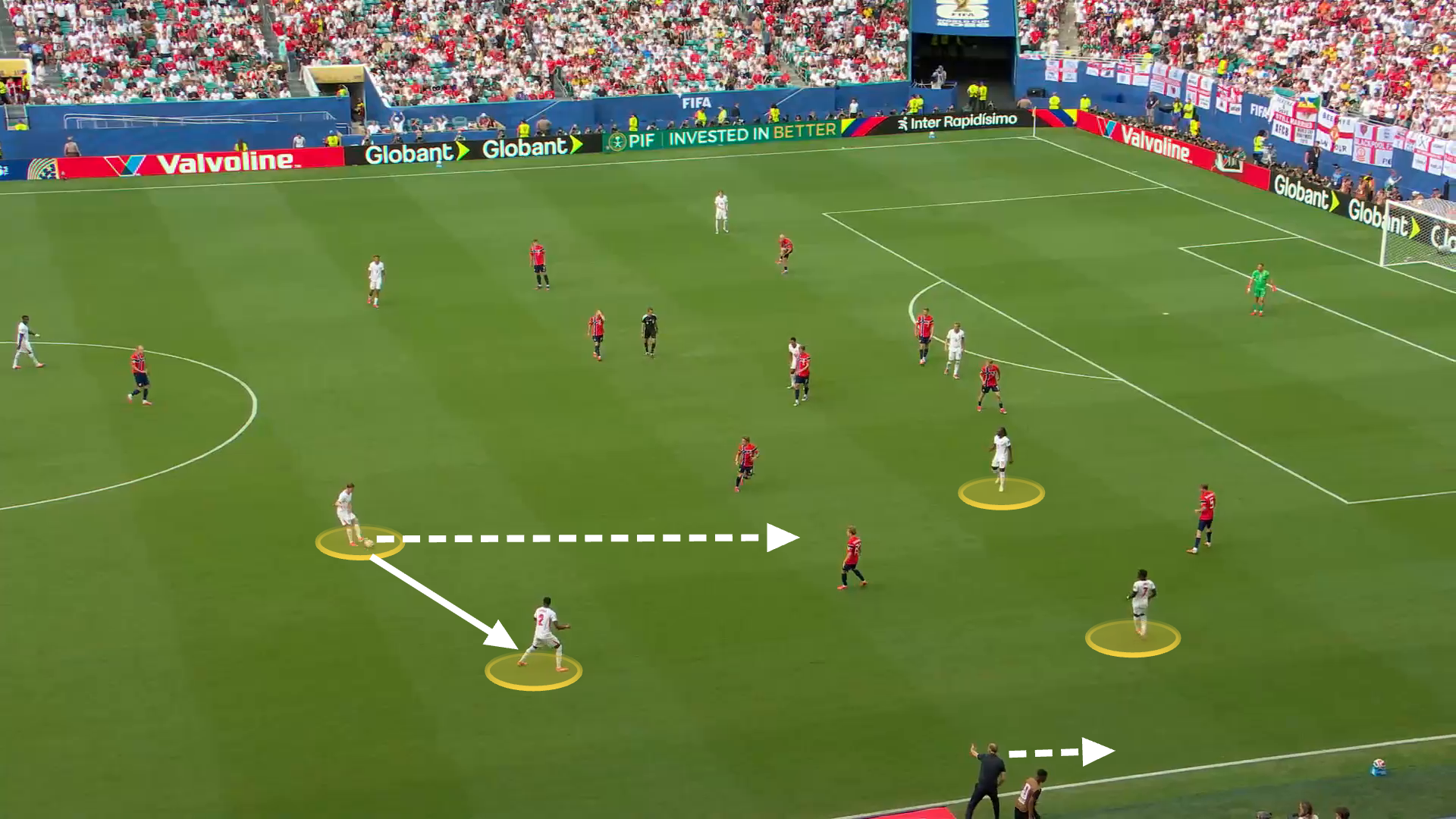
In the second half, an animated Tuchel urges the player on the ball forward to commit Norway's midfield, with the potential of an overload on the flank easy to manufacture here. Saka and Eze are both in space. Instead a safe pass is played to full-back Konsa
The wide midfielders of Norway did not drop into the defensive line, instead holding their position in line with the central midfielders. Behind them, Norway kept a narrow back four.
This gave England multiple possible solutions through their wide triangles.
Using Anthony Gordon, Anderson and O'Reilly as an example below, we see the England winger move from a left-wing position into a more narrow position inside the Norweigan right-back, Julian Ryerson.
Norway's right midfielder, Alexander Sorloth, holds his zone, which means O'Reilly or Anderson could move into the space out wide behind him.
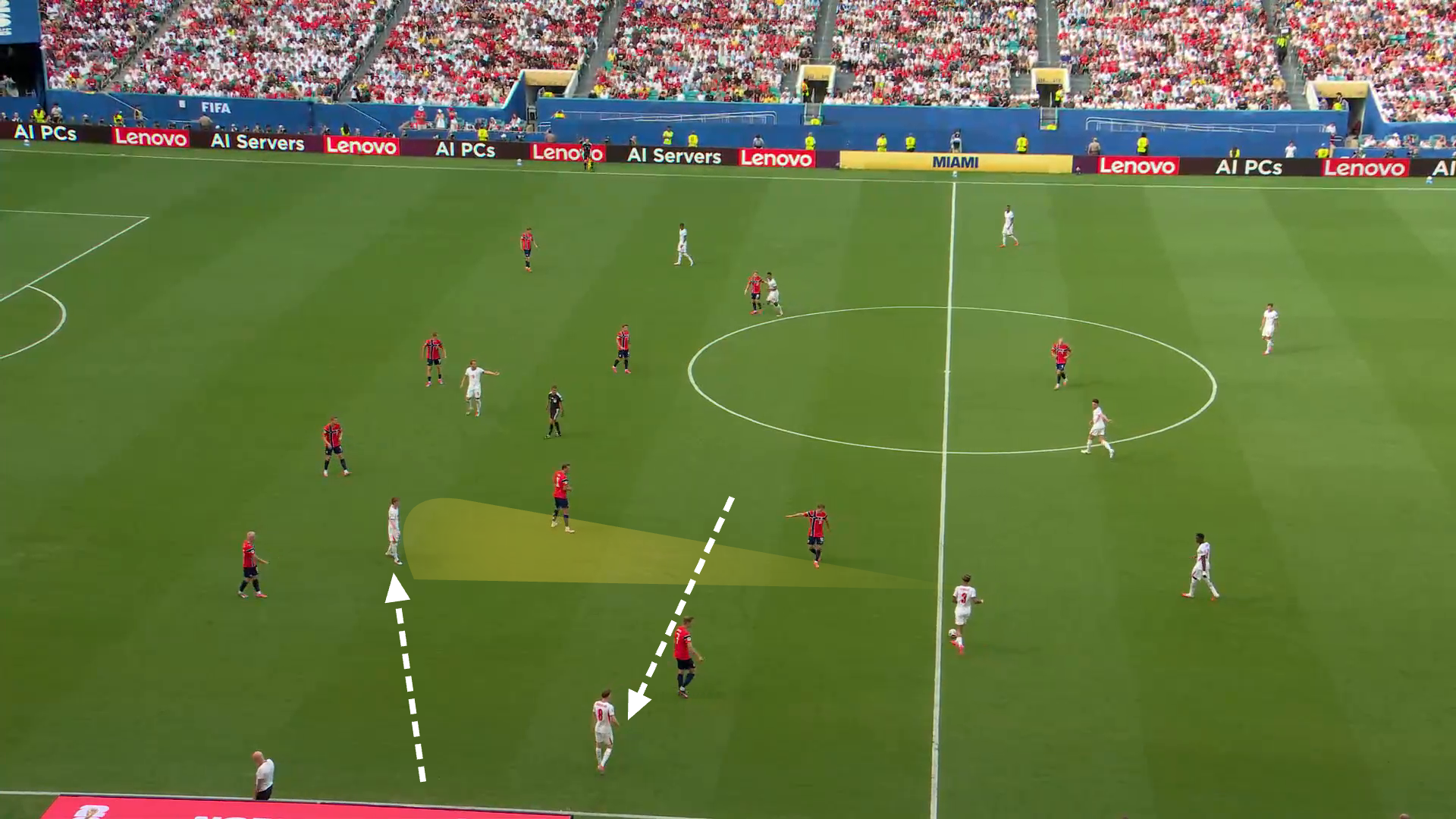
An example of England's wide rotations: Gordon moves central as Anderson pulls out wide. Both aren't directly marked against Norway's zonal defence. O'Reilly, on the ball, passes it back to Guehi rather than forward
The zonal defending of Norway meant they were not tracking the movement of the England players, but instead looking to defend whoever arrived in their zone.
If England players were to run, off the ball, into spaces that were empty, they would have found themselves free. Playing quickly into these wide players then would have almost certainly given England numbers around the opposition full-back.
Frustratingly for Tuchel, similar patterns worked for Iraq and France against Norway, both sides who arguably don't put as much emphasis on this approach compared to the ex-Chelsea manager's England.
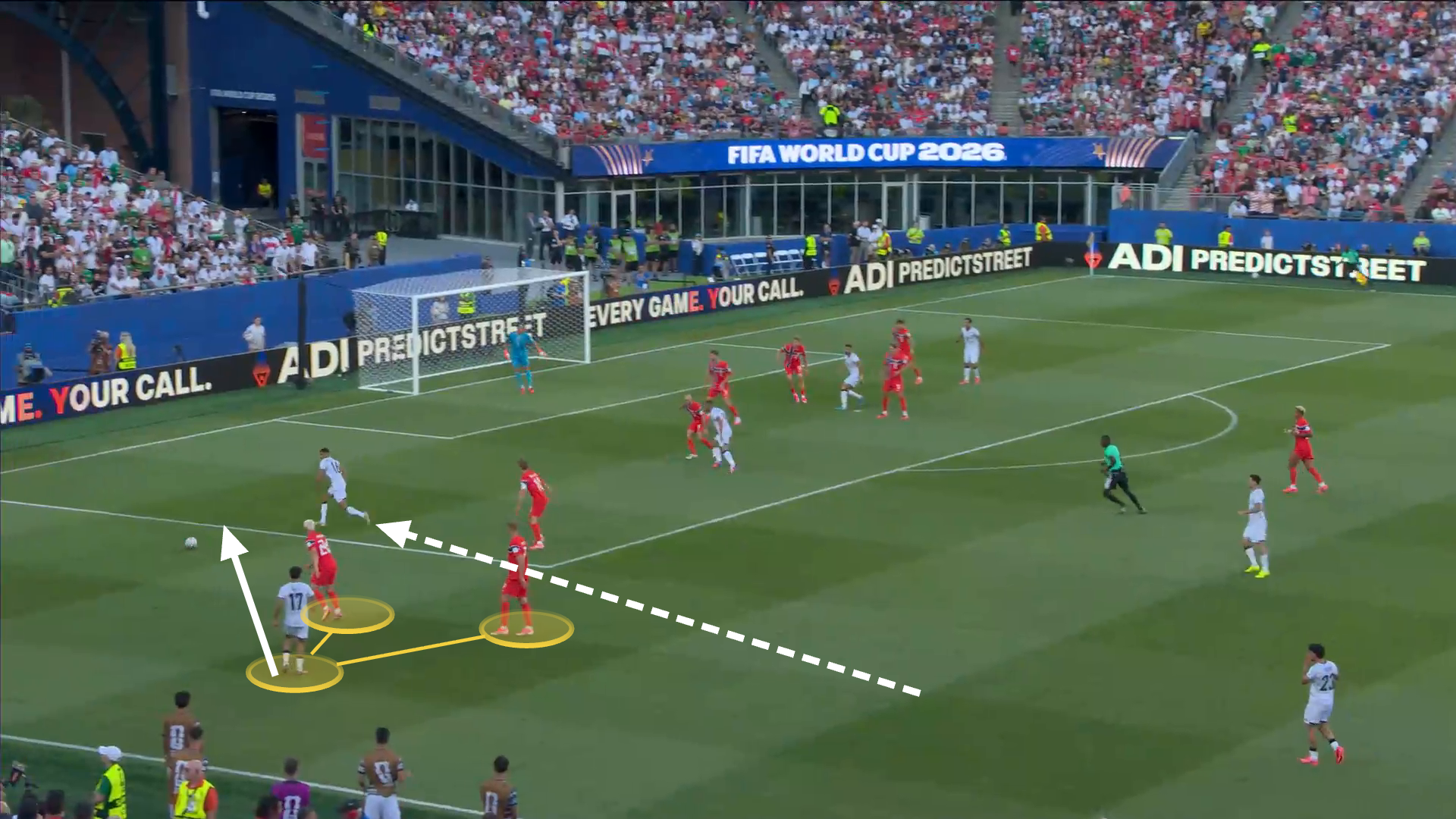
Teams have scored against Norway's organised 4-5-1 through rotations and dangerous runs out wide. This situation, with the attacker arriving in the final third unmarked, led to a goal for Iraq following a cross
Continuing with the example below, the ball isn't played into the free players out wide quickly enough and instead Guehi finds himself on the ball at a walking pace.
England fail to recognise where the space is early and instead of looking to play through the wide areas, the Manchester City defender forces a pass through the middle, losing the ball in a dangerous area.
This is an example of what Tuchel was likely eluding to when using the word "sloppy".
Assistant coach Anthony Barry's half-time quotes provide valuable insight at this tournament. In England's opener against Croatia, he said: "[We were] not playing through the gaps, not [accelerating] our game the way we wanted to. We fell back into some fearful patterns."
Although England have found a way to arrive at the semi-finals, this assessment still holds elements of truth five games later.
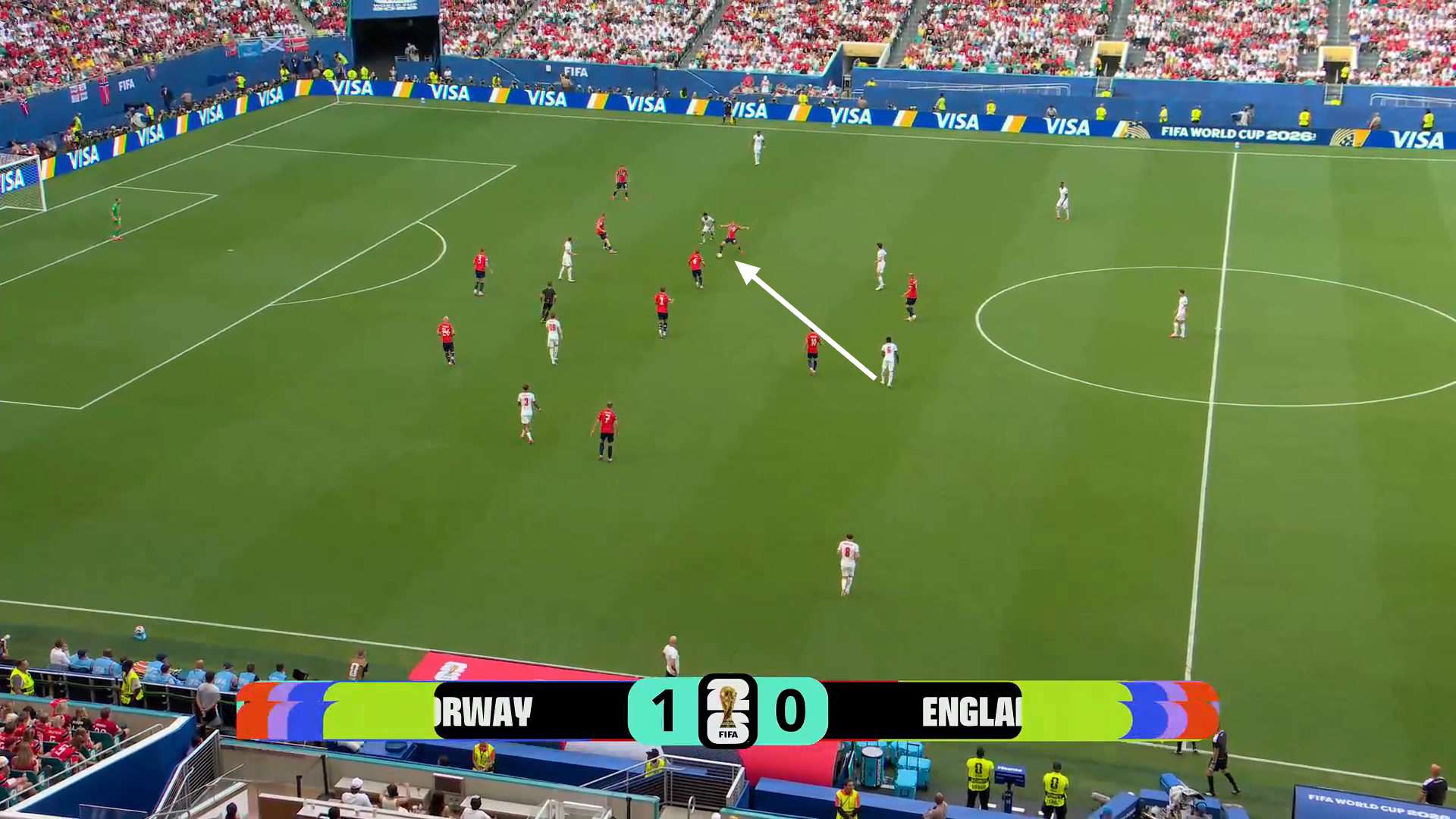
While trailing, England were well set up to attack down their left. Instead the ball was moved in-field to Guehi, who lost possession attempting to find Bellingham
How do England keep winning?
Tuchel's side were unable to exploit Norway's defensive weaknesses when the game looked like an attack v defending drill. They did, however, still win the game.
For England's first goal, Orjan Nyland's long goal-kick landed at Anderson's feet. Norway, preparing to compete for the punt long to Sorloth, were caught in a disorganised defensive shape.
Recognising the space that opened, Anderson powerfully carried the ball up the pitch. His direct run towards Ryerson, and behind Sorloth, committed the right-back, giving Gordon the chance to run down the flank unmarked.
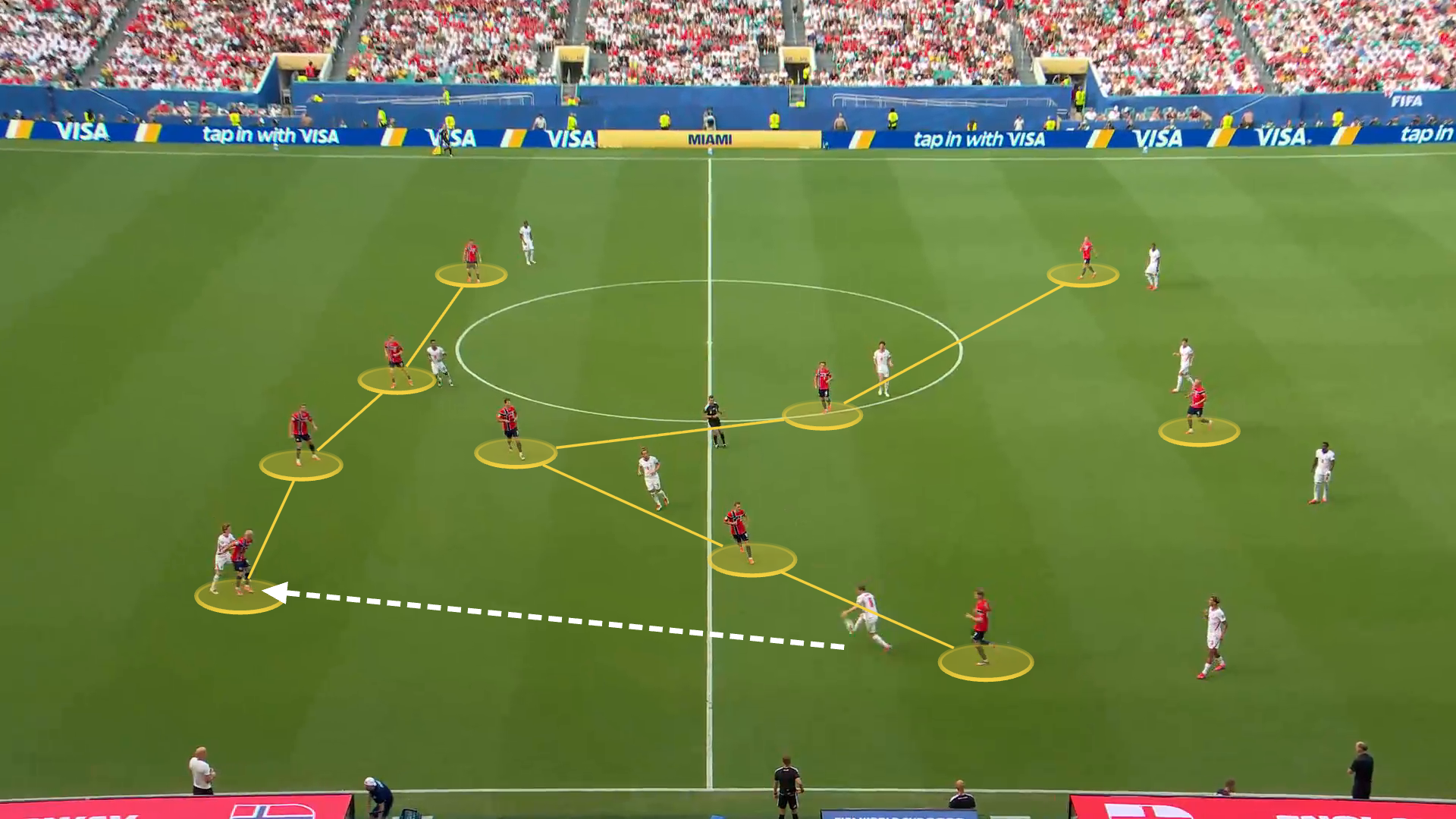
Norway's 4-5-1 is disjointed as they are set up to contest the goal-kick. Anderson smartly takes advantage of this space
Centre-back Kristoffer Ajer has to come across to defend Gordon. With Ajer pulled across, midfielder Sander Berge dropped into the defensive line, something Norway don't do in their organised shape.
This opened up the pass centrally into Bellingham who, arriving late, was unmarked, before his impressive finish.
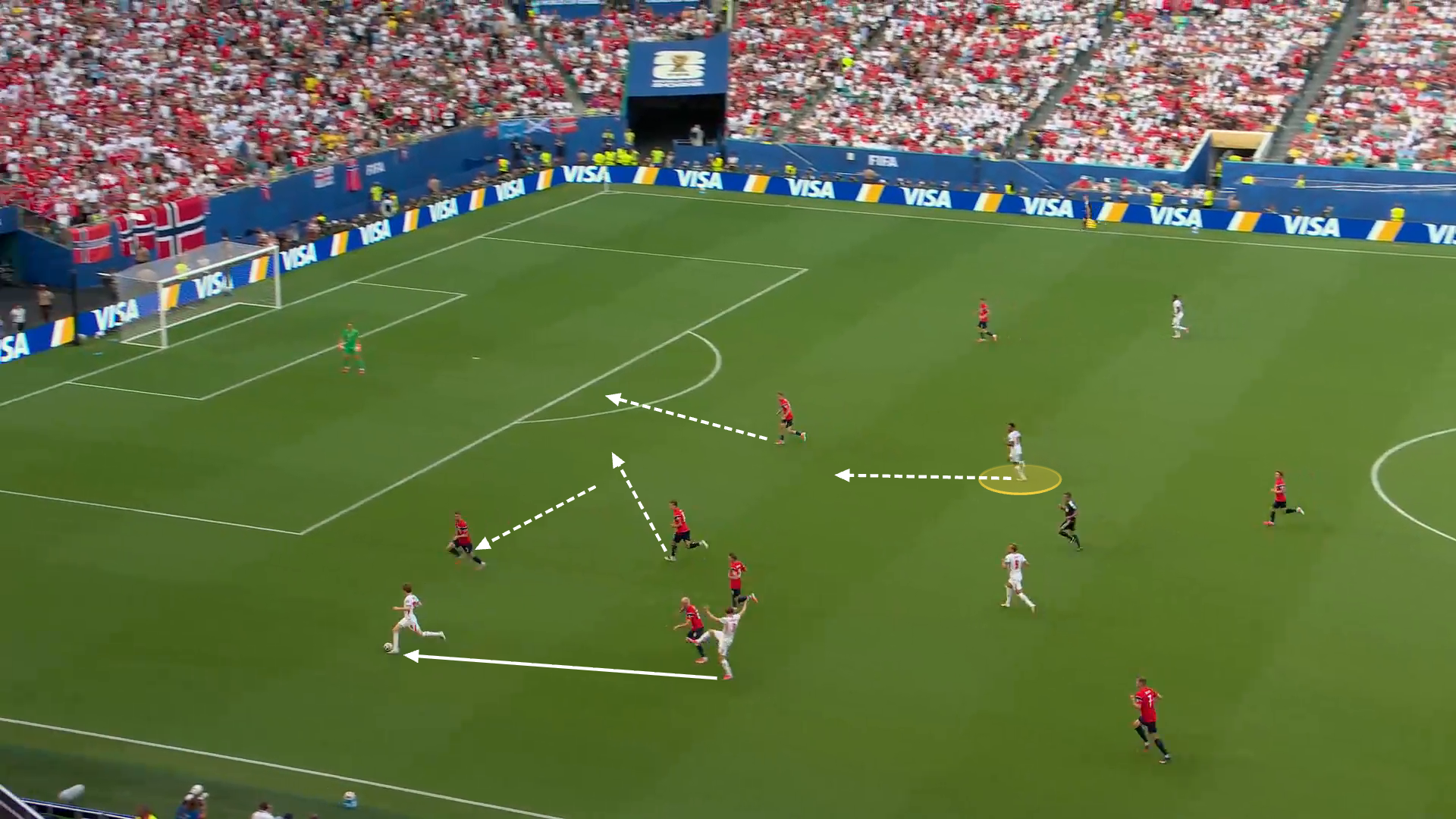
Ryerson is forced out to Anderson, which forces Ajer across to Gordon. This in turn forces Berge into defence and opens up space for Bellingham (yellow) to receive the ball
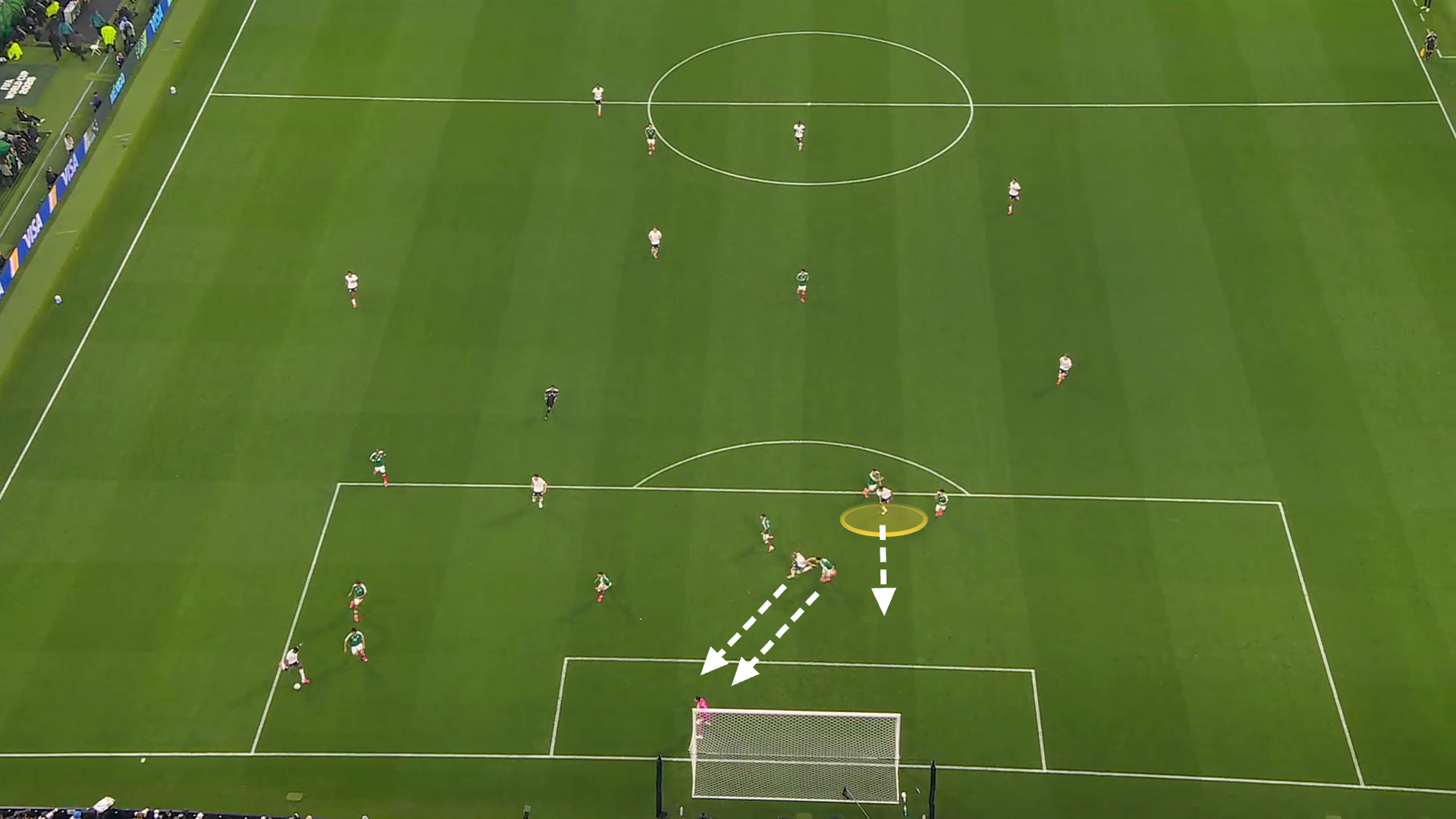
Interestingly these details cropped up in England's opening goal against Mexico. After a quick turnover against a disorganised defence, Rice powerfully carried the ball up the pitch, running at the full-back and delaying him from getting out to Saka.
The late run of Bellingham is found with the Mexican centre-back being pulled away from England's number 10 – this time by a forward run from Kane.
It's a testament to England's players taking advantage of the opposition's momentary disorganisation and showcasing skills that come naturally to them. It's hard to coach Bellingham's timing and instinct, or Rice and Anderson's ball-carrying.
- Image caption,
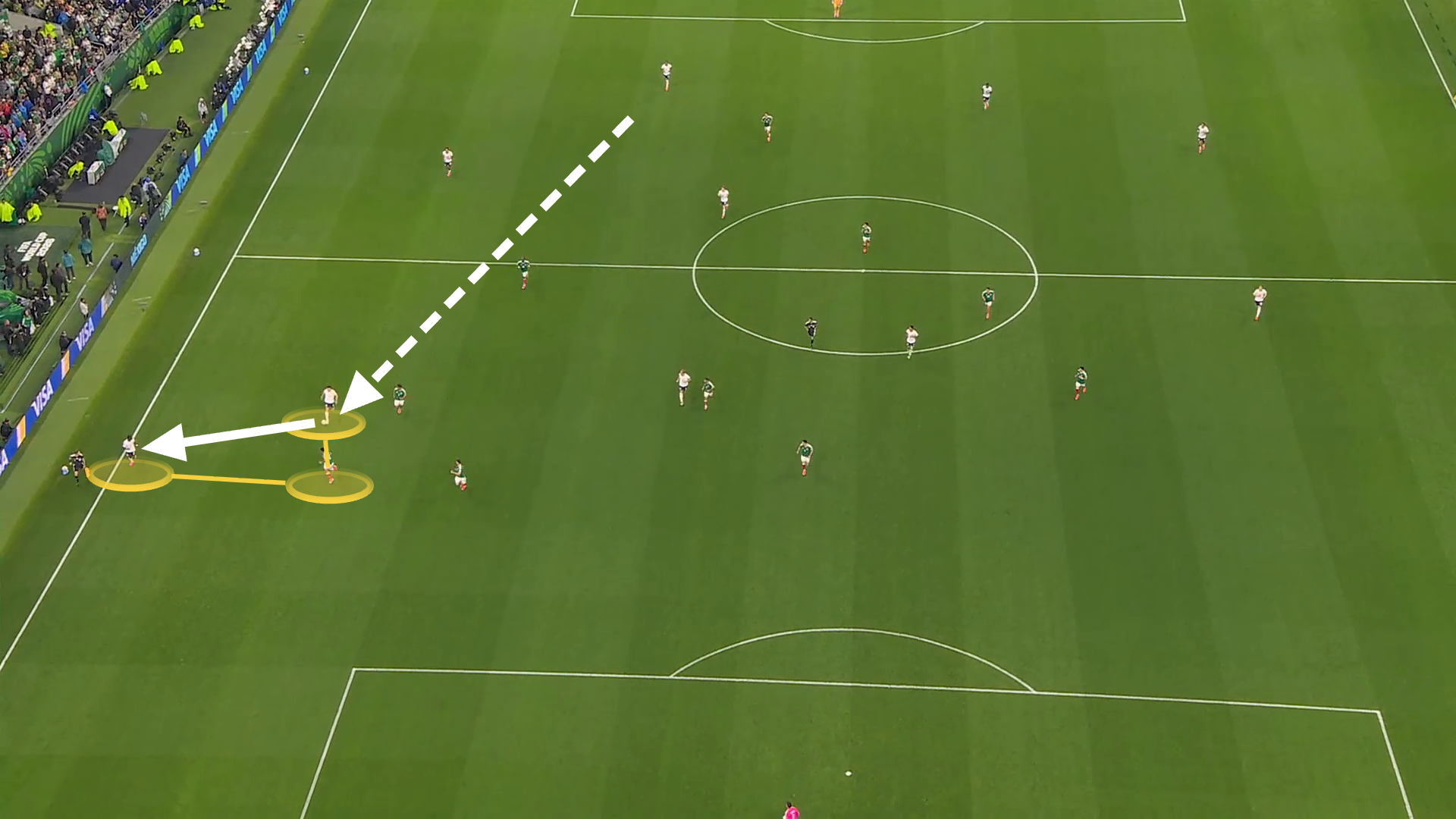
Following a Mexico attack, Pickford finds Rice, who takes great initiative and carries the ball a long way. He runs at the full-back, committing him, before releasing Saka
For England's winner on Saturday, Norway again were not in their 4-5-1 shape, disorganised this time after defending a corner.
In the phase of play following this, England seized the moment, with players leaning on their standout traits. Morgan Rogers' ball-striking from distance, a strength of his, was parried by Nyland before being tapped home following expert anticipation from Bellingham.
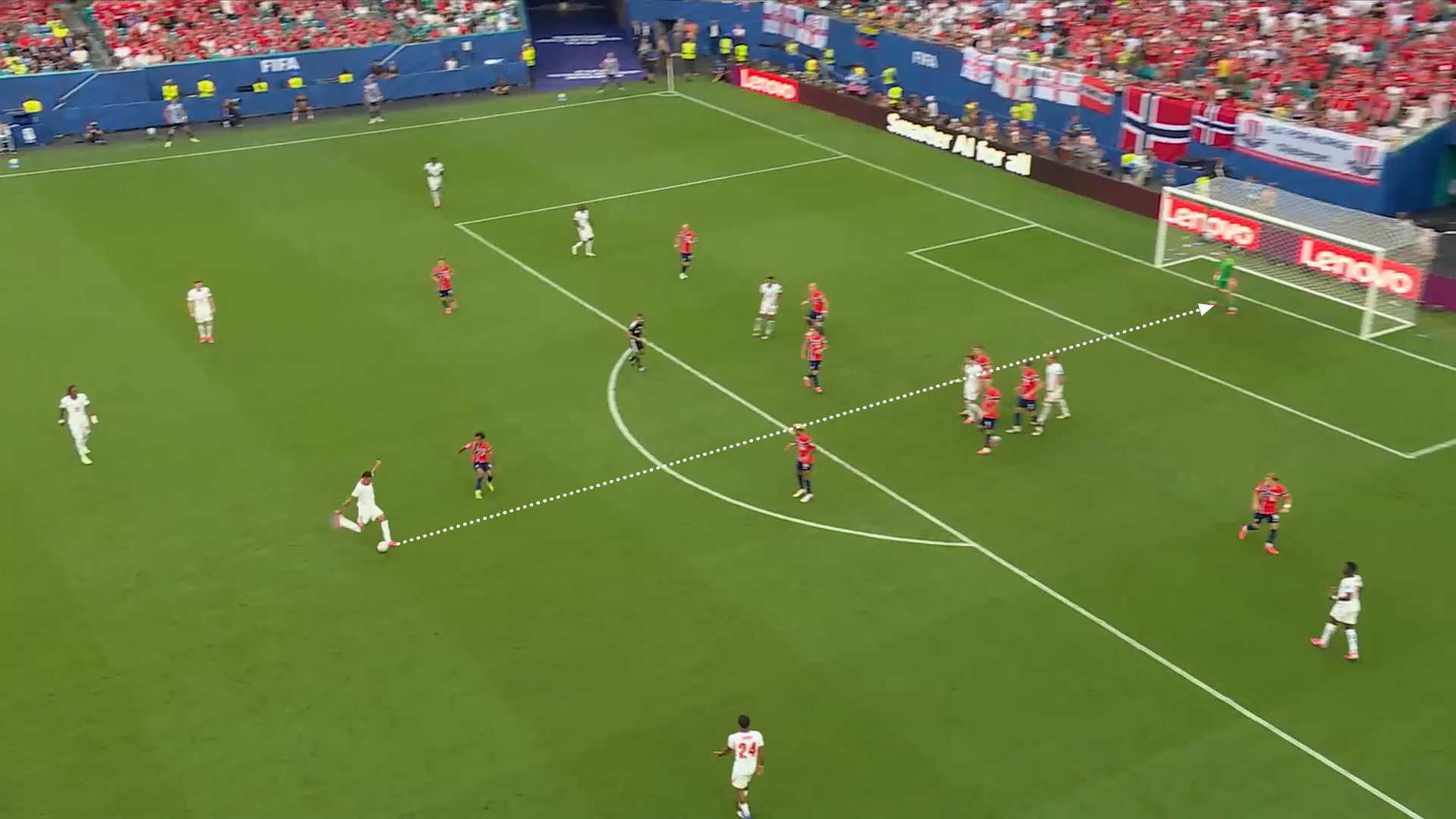
In the phase of play after a corner, Norway find themselves defending deep in the box. This gives Rogers space outside the area, something that would not occur against Norway's 4-5-1. His powerful strike results in a rebound that Bellingham finishes
Post game, Bellingham said: "The game is split into loads of different facets – technical, tactical, and, the biggest one is psychological, managing adversity."
The manner in which England's players have stepped up, appearing to thrive in chaotic game-states, is commendable, and shows not only a psychological strength but a level of individual footballing quality too.
For Tuchel, "performance helps you win games", and it is his job to create the conditions that more reliably give England chances throughout a match.
With Argentina in the semi-finals, a team that have shown vulnerabilities out wide, he will undoubtedly remain fixated on getting his wide triangles to work.


 English (US) ·