
 4 months ago
73
4 months ago
73
ARTICLE AD BOX
Doug Faulknerand Nick Triggle,Health correspondent
'People can and should' still go to school and college' - Health secretary
It is not necessary for people to privately buy a meningitis vaccine despite an "unprecedented" ongoing outbreak in Kent, the health secretary has said.
Wes Streeting told BBC Breakfast that, while he understood why people were concerned and seeking jabs, the risk to the general public was "low".
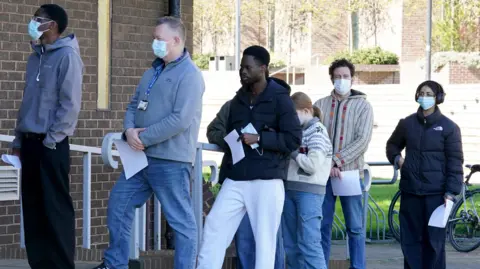
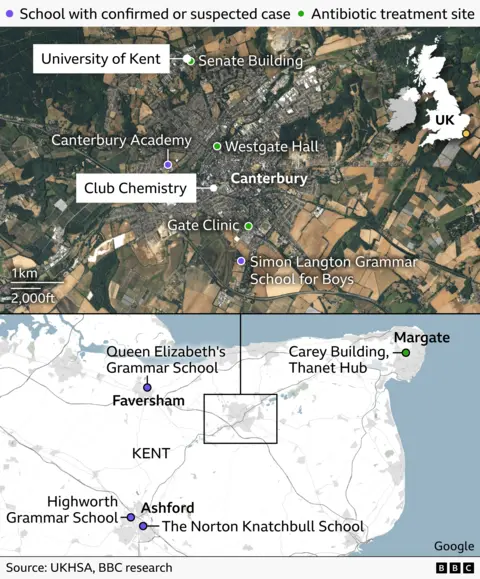
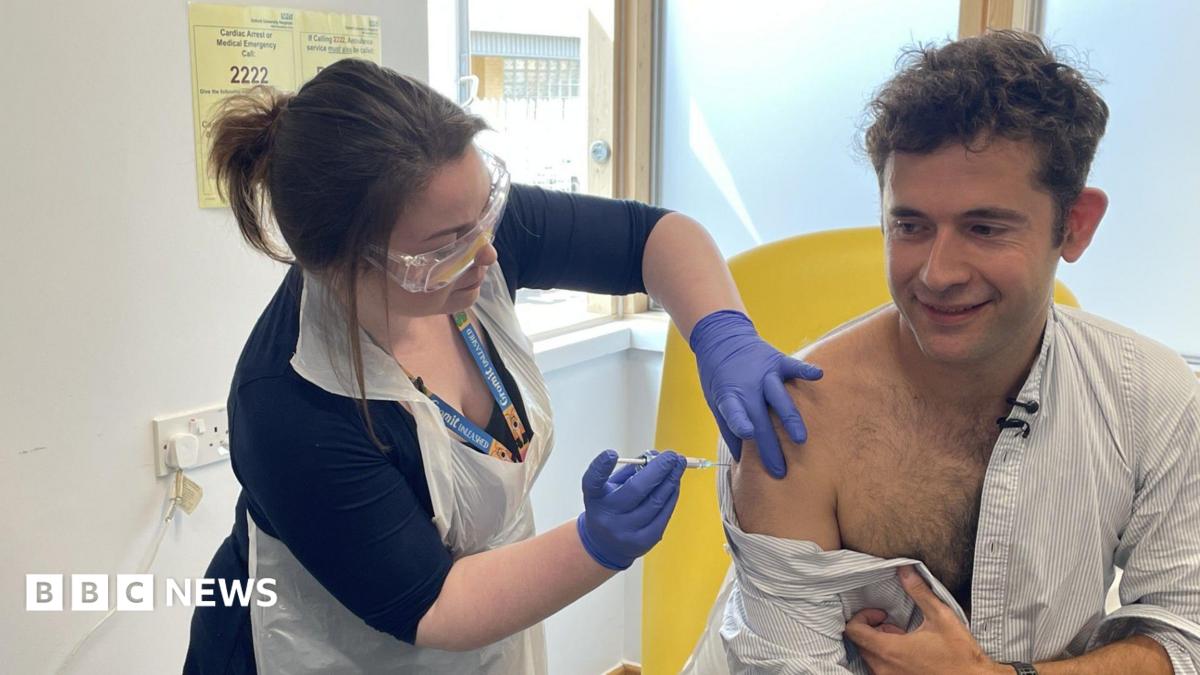
A targeted vaccination programme has begun for students in halls of residence at the University of Kent, in Canterbury, where the outbreak has occurred, with antibiotics also being distributed.
Five more cases were confirmed in Kent on Wednesday, taking the total number of confirmed and suspected cases to 20, with the outbreak being connected to a nightclub.
Two people have died - a 21-year-old university student and sixth form pupil Juliette.
Officials believe there could be more cases yet to be found.
Babies are routinely offered a vaccine against MenB, and have been since 2015, but the UK's current generation of older teenagers and university students have not, since the shot was not available when they were born.
The UK decided against running a widespread catch-up campaign to vaccinate teenagers, but some parents have been buying the jab privately.
Streeting said: "It is not a surprise to me people seeing the headlines and thinking 'I will go out and buy myself a vaccination' but just to be clear that is not necessary."
He said some pharmacies had run out of vaccines but said there was not a concern about supply for the children and young people covered by the national vaccination programme or the current roll out of jabs in Kent.
About 5,000 students living in university halls in Kent are being offered the MenB jab to provide longer-term protection if the strain behind the current outbreak continues to circulate.
Separately, Streeting said 2,500 doses of antibiotics had been distributed through sites in Canterbury and Broadstairs , which he said were effective in 90% of cases.
Across the country, worried parents and students have been trying to get the jab privately, but pharmacists told the BBC they have either run out of stock or are down to their last supplies.
Oliver Picard, chairman of the National Pharmacy Association, told BBC Radio 5 Live that his own pharmacies were getting a booking for a jab every two to three minutes with more than 100 overnight. "It is unsustainable," he said. "We don't have any vaccines. We always keep a small stock which was used up very quickly."
He said the association had received reports of "abuse and intimidation" of pharmacy staff which was "absolutely unacceptable".
Prof Anjan Ghosh, director of public health at Kent County Council, said it took two doses and four weeks on average for the vaccine to "fully come into action", so it would not "come into play to prevent" the current outbreak.
He also said there was no reason to wear masks because of the type of contact which led to transmission.
"They can actually create the wrong message as well, because it can actually spread panic and again, revive the memories of Covid when not this is not Covid, it is a very specific infection which has a specific way of spreading," he said.

 PA Media
Students queuing for antibiotics outside a building at the University of Kent in Canterbury
Streeting said from the very first case, contacts had been traced, with antibiotics being offered to those who may have interacted with someone with the illness.
"This disease, whilst very serious, is spread through close personal contact," he added.
This involved kissing, sharing drinks or vapes and living in shared accommodation, he said, which is why the government is particularly concerned about people who were at Club Chemistry on 5-7 March and in halls of residence.
"So I hope people are reassured that we are managing it, antibiotic provision is there, we're standing up vaccination and general risk is low even if the disease itself is very serious."
He said there was not concern about students returning home from Kent and spreading the bacteria and said it was right for students in the area to sit their exams and for pupils at schools and colleges to go to school as normal.
Five schools in the county have confirmed or suspected cases and hundreds of people are being offered antibiotics as an immediate treatment.
People sitting on trains or travelling home "aren't things we were worried about", the health secretary added.
It is estimated 10 to 20% of people have the meningitis bacteria in the back of their throat without it causing any illness.
But, in small number of cases, exposure can trigger invasive meningitis which leads to blood poisoning and brain inflammation.
There are about 300 to 400 cases a year of invasive meningitis in England, 80% of which are meningitis B which is behind this outbreak.
The vaccine is not effective against all forms of meningitis B, which is essentially a collection of different strains.
Teenagers aged 14 are offered the MenACWY vaccine which protects against four types of bacteria that can cause meningitis - meningococcal groups A, C, W and Y.
Meningitis B vaccines have been offered to babies since 2015 and Streeting said he had asked the independent vaccine advisory body, the Joint Committee on Vaccination and Immunisation (JCVI), to revisit its advice on a wider catch up programme in light of the Canterbury outbreak.
But he said he was making "no judgement at this stage" and would follow the data, evidence and advice.
Former JCVI member Adam Finn said the risk of any young person getting meningitis B was "fantastically small" and "even within Canterbury" it was not necessary for people who did not have a connection to the outbreak to look for the vaccine.
He added this was not an infection which would "shoot through the population", it was "not Covid", and he expected the outbreak to die out in the coming days.
Dr Leyla Hannbeck, chief executive of the Independent Pharmacies Association, called for the NHS to coordinate a pharmacy-led roll out of jabs to teenagers and young adults, adding that they were seeing demand "rise rapidly".




 English (US) ·