
 3 weeks ago
43
3 weeks ago
43
ARTICLE AD BOX
In the knockout stages of a major tournament, there is a genuine risk of elimination irrespective of the opposition.
Germany's elimination at the hands of Paraguay - a team that started the World Cup losing 4-1 to Mauricio Pochettino's USA - proves that point well.
England's next opponents, DR Congo, finished their group in third place, beating Uzbekistan, drawing to Portugal and losing to Colombia, but how do they play and what challenges might they pose against head coach Thomas Tuchel's men?
DR Congo face England on Wednesday (17:00 BST), live on BBC One and iPlayer.
Throughout the tournament so far, they have set up in a 5-3-2 formation, a shape that has been consistent both on and off the ball.
Their average possession so far sits at 38.8% which pales in comparison to England's 65.7% - second only to Spain (70.3%). This suggests that DR Congo are a stubborn defence-first team looking to spring counter-attacks on their opposition.
And while this is mostly true, they are surprisingly front-footed in how they defend.
This could change against England, but against both Portugal and Columbia, opponents that dominated the ball, DR Congo pressed high against them from goal-kick situations.
From their defensive block, they look to hold their line higher than you would expect from a team with 38% possession, not dropping into their own box as often.
There is also a tendency for their players to apply pressure, particularly to the player on the ball, and nearby team-mates around the ball.
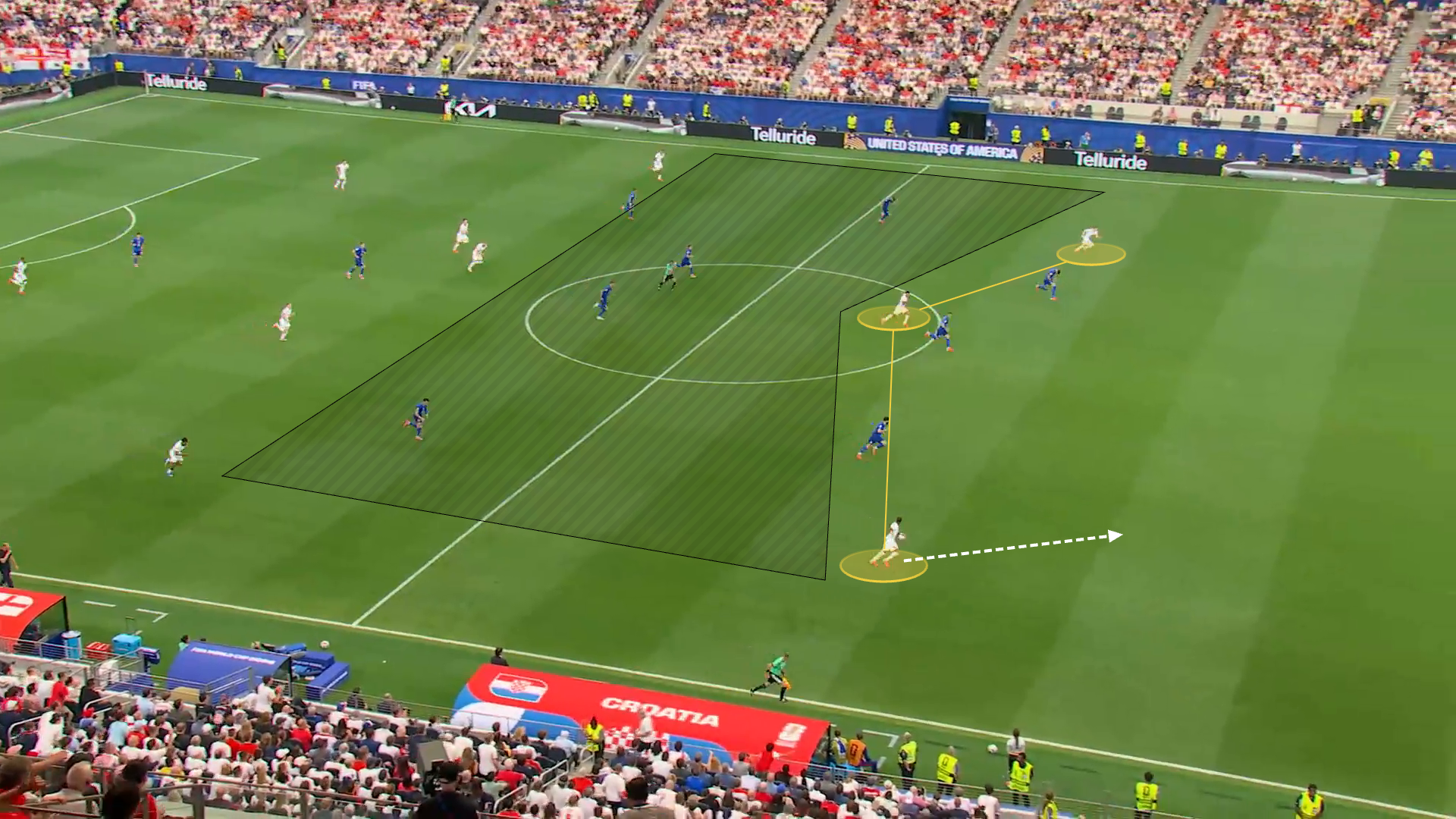
All of these decisions, although more proactive than simply camping in their own box, are quirks England could look to exploit.
- Image caption,
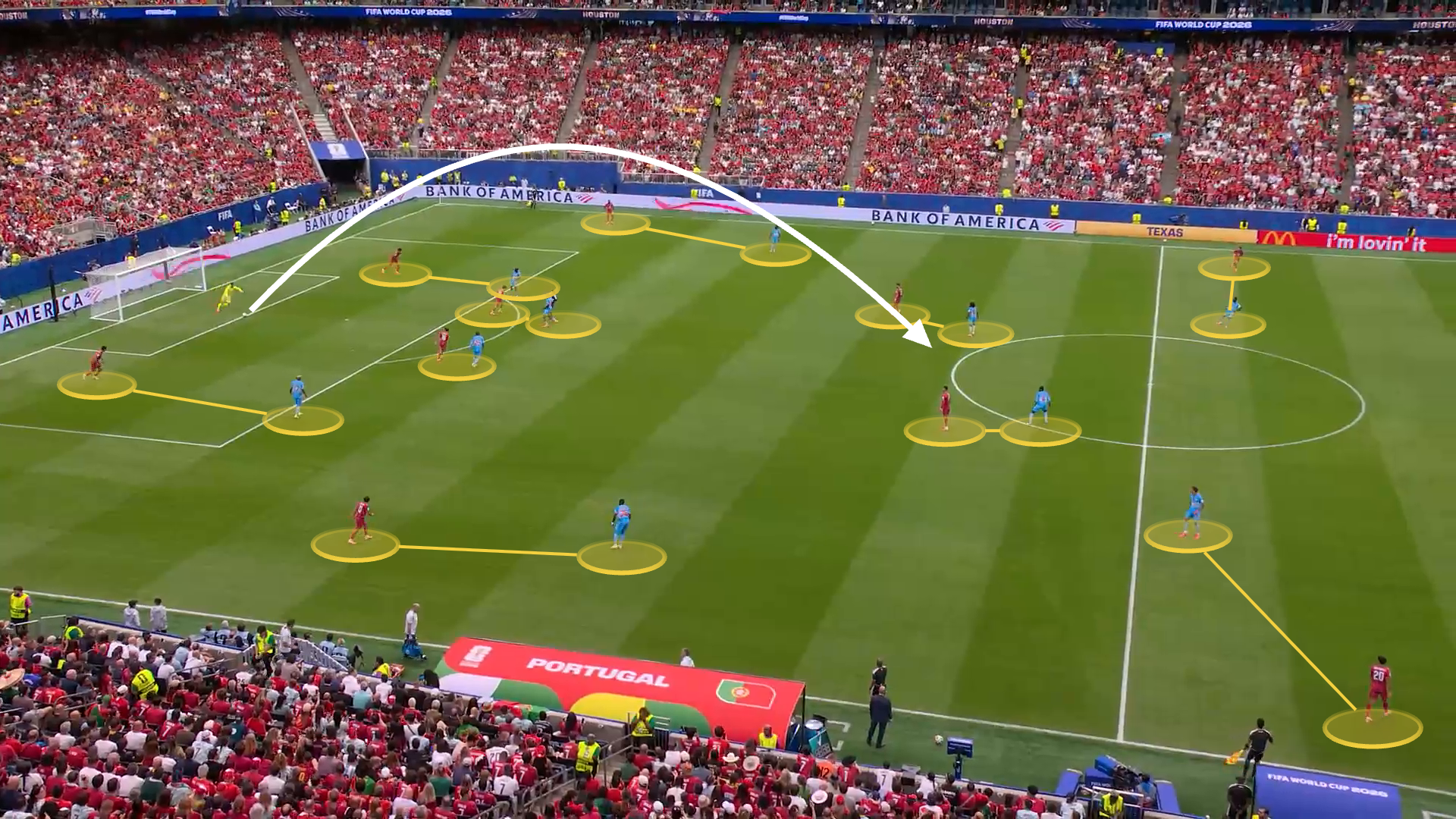
Here we can see DR Congo's man-to-man approach from goal-kicks. With Portugal leaving attackers high and dropping everyone else towards the ball, the middle of the pitch is empty. Going long gives Portugal a four against four situation
- Image caption,
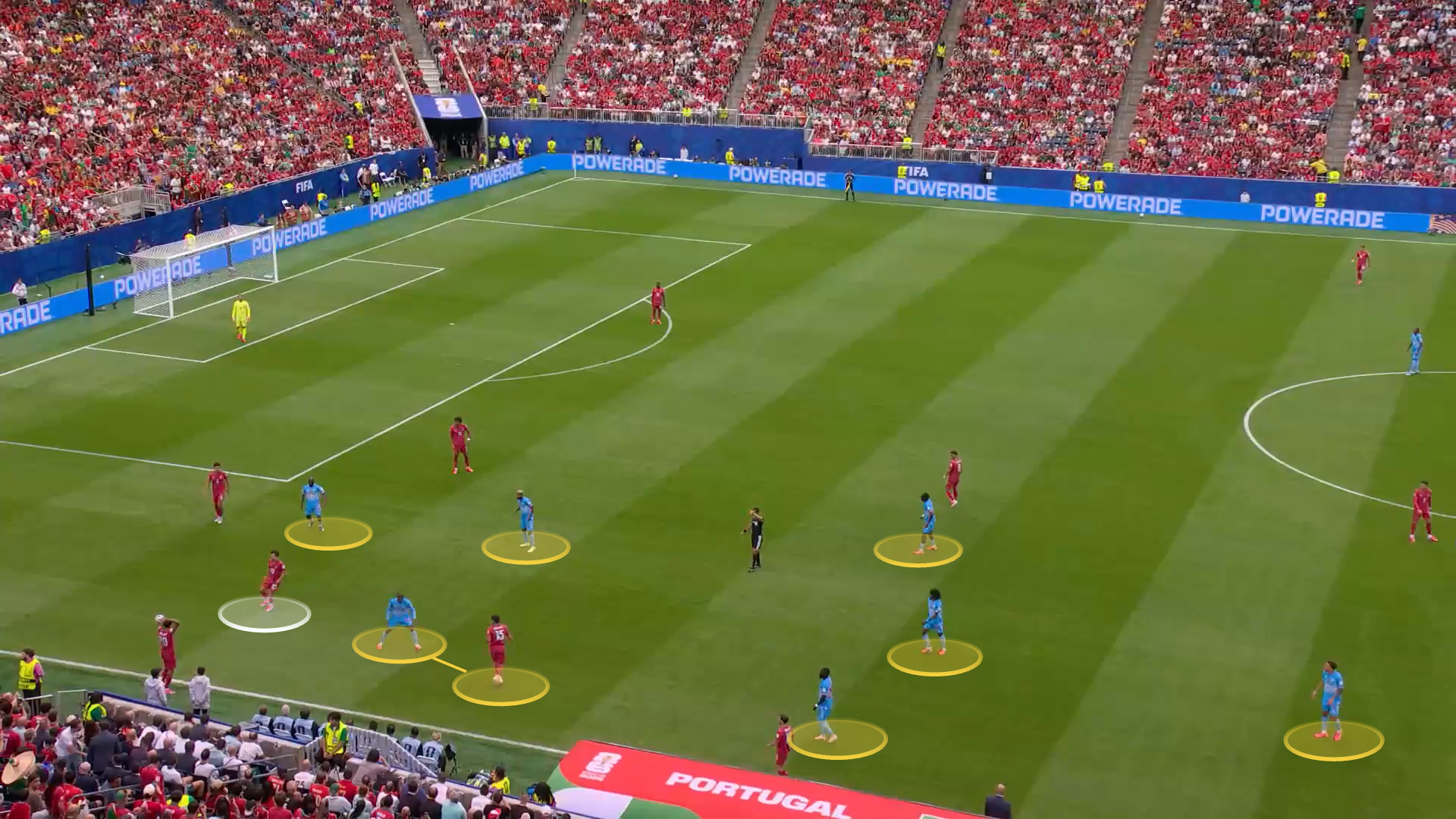
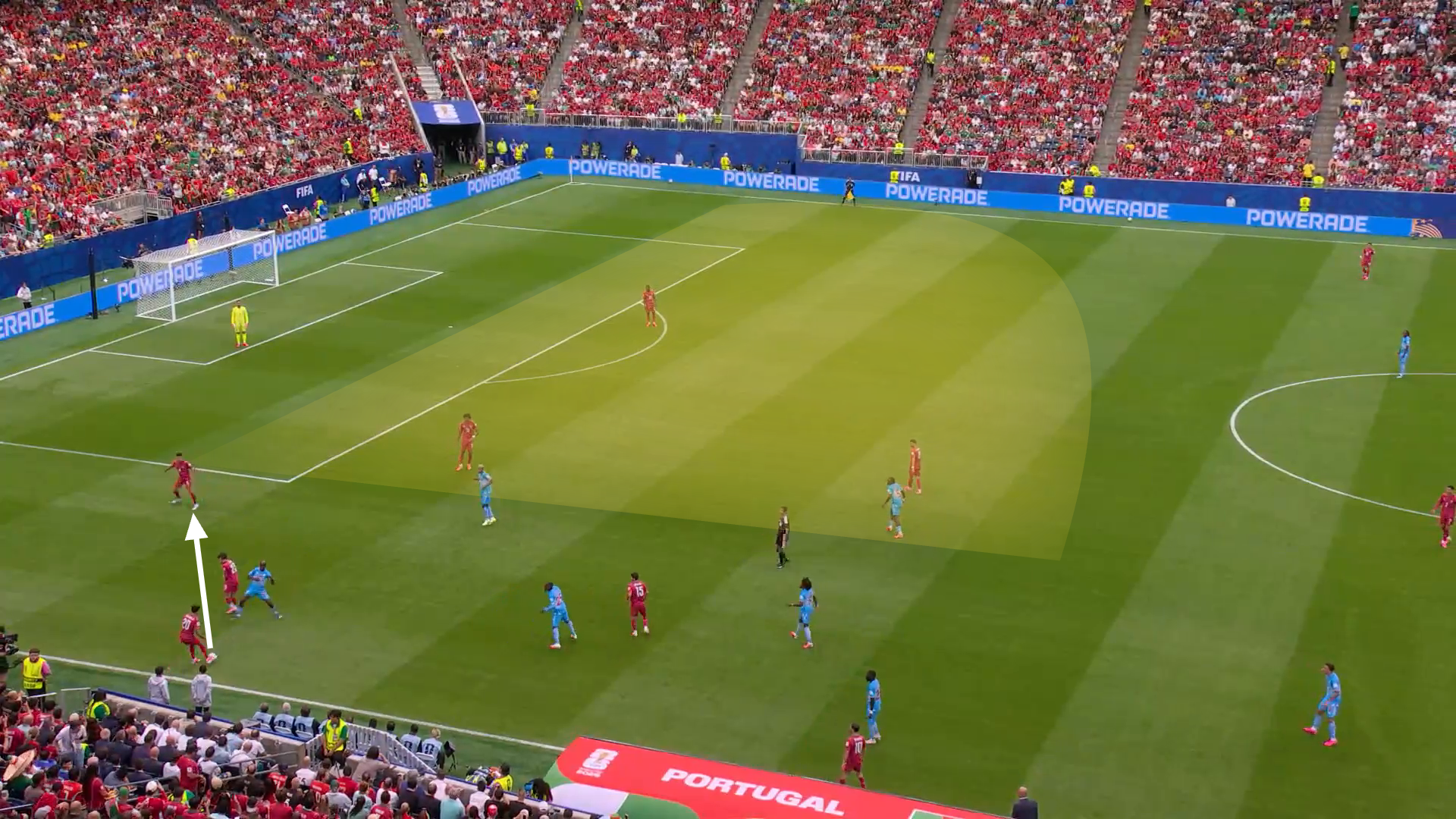
Joao Neves drags the closest Congo player away from the thrower whilst Vitinha shows for the ball, unmarked





 English (US) ·