
 3 hours ago
7
3 hours ago
7
ARTICLE AD BOX
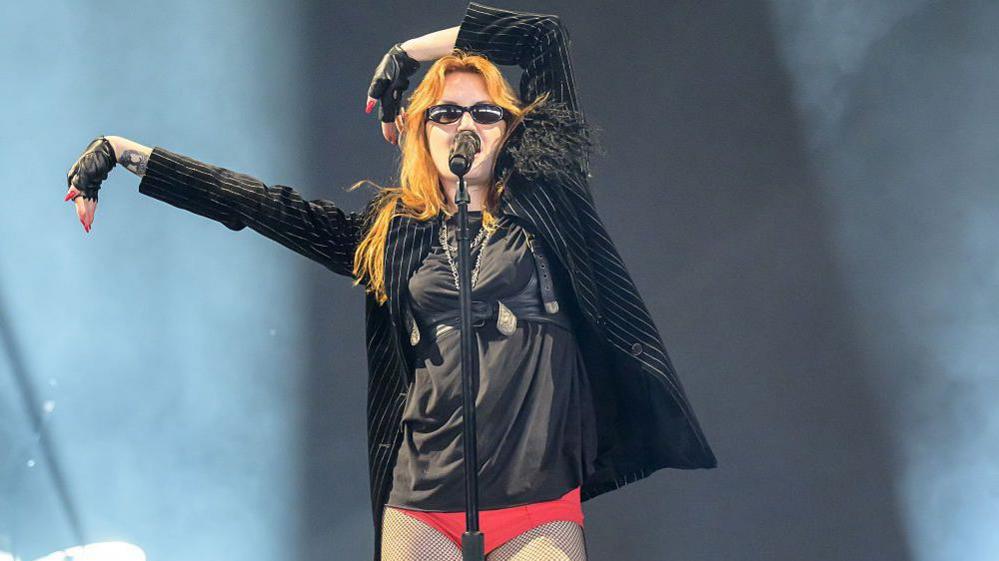 Image source, Getty Images
Muna's concert for rescue dogs didn't go according to plan
Every band has to earn its stripes. Some have it harder than others.
At AC/DC's first gig, the club owner cut the power because they were too noisy. Sam Smith started at barn dances, singing on top of a haystack. At Robert Smith's first concert, he got so drunk that he sang David Bowie's Suffragette City while the rest of the band played Jimi Hendrix's Foxy Lady.
But LA pop trio Muna can top them all.
At the start of their career, the band got a call from their record label. We know you've just flown overnight from London, they said, but you have to get to Las Vegas.
Why? Because they'd been booked to play Pet-A-Palooza, a dog adoption festival sponsored by the local radio station. If they turned up, the station would support their new single.
"We were all sick, so it was doomed from the start," recalls guitarist Josette Maskin.
"It was an acoustic set, but we didn't have a sound guy, and the guitar started feeding back."
The noise, according to singer Katie Gavin, was like an unholy screech.
"The dogs were getting upset," says Maskin, wincing at the memory. "They just howled the whole time.
"We were mortified, but looking back, it is so funny. And I've gotten to share those experiences with some of my best friends, and that's what life is really about."
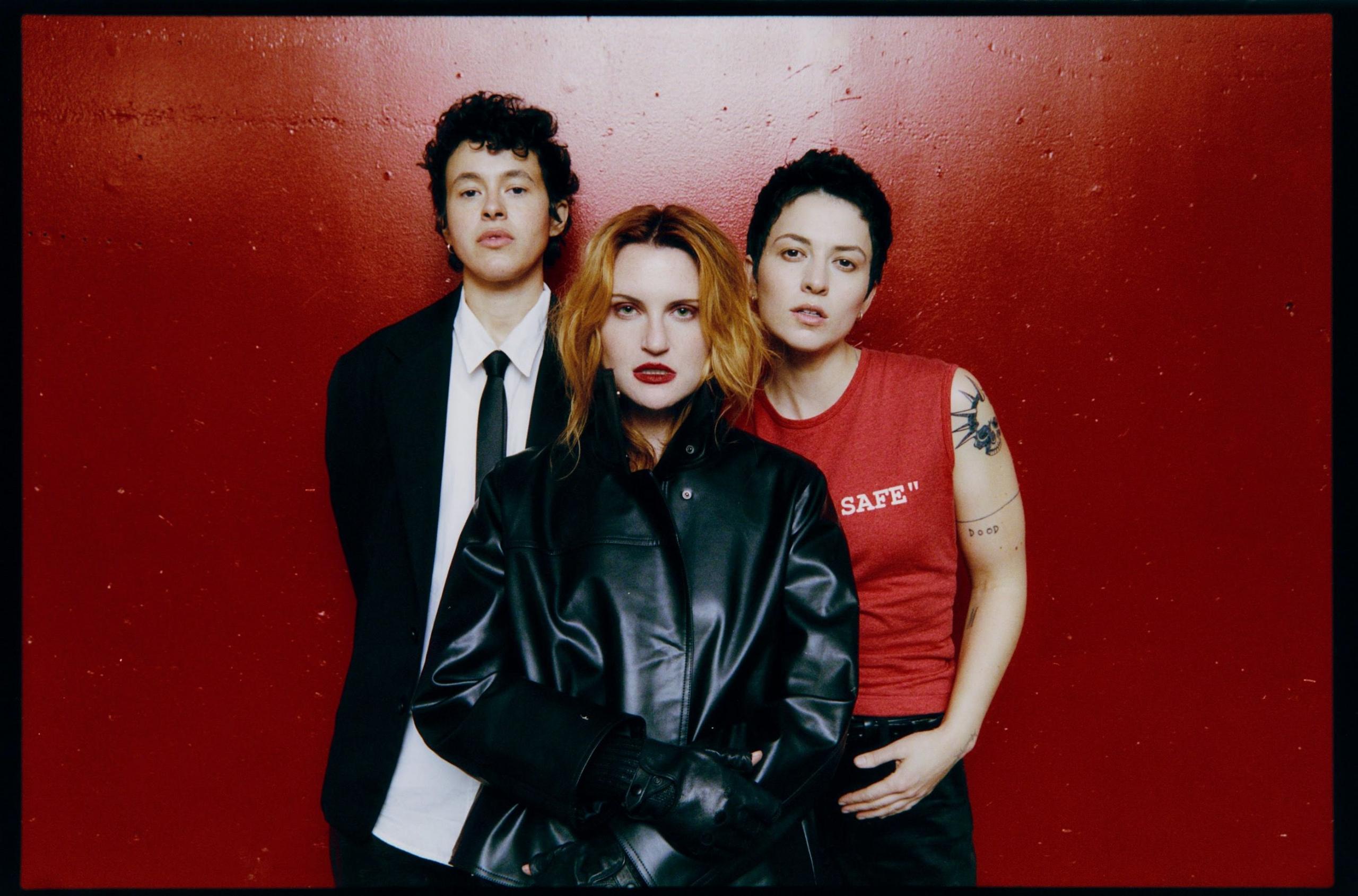 Image source, Dean Bradshaw
Muna in 2026 (L-R): Naomi McPherson, Katie Gavin and Josette Maskin
Nowadays, that canine catastrophe is a dot in Muna's rear-view mirror.
Over the past decade, they've become one of the most compelling live bands around – a little bit punk, a little bit electronic, a little bit 80s, eminently watchable and endlessly impressive.
Fans include Harry Styles and Taylor Swift, who handpicked the trio (completed by guitarist/producer Naomi McPherson) to support them on tour.
They were won over by sing-along anthems like I Know A Place, a great big exuberant hug for the LGBTQ community; and the more introspective Stayaway, where Gavin locks herself in her bedroom to avoid anything - friends, music, drink - that could tempt her back into the arms of an ex.
In 2020, all their momentum nearly came to a crashing halt when RCA Records dropped the band, citing pandemic-era cost-cutting.
"That's obviously one where we had to put our heads together and be like, 'OK, we want to continue doing this. Let's just make an album and we'll figure it out'," says McPherson.
That album, simply titled Muna, was eventually released by indie star Phoebe Bridgers, who swooped in to sign the band to her Saddest Factory label in 2021.
"Phoebe's manager had made it very clear that if we were ever single, she'd be interested in working with us," Gavin told the BBC at the time.
Bridgers also provided guest vocals on Silk Chiffon, a freewheeling sapphic love song that became Muna's breakthrough single.
It pegged the band, in its members' own words, as "the queer joy mini-skirt rollerblade, external" crew - but their music has always dug deeper than that.
I Know A Place, for example, was written as a response to the 2016 Pulse nightclub shooting, acknowledging the fragility of the communal LGBTQ spaces it celebrated.
Their fourth album, Dancing On The Wall, is their most powerful yet.
The music is darker. The lyrics hit harder. Ostensibly anchored to the dancefloor, it's a record that uses dance music to shake the listener out of complacency.
"I think it was a response to a feeling of helplessness in this moment in time that can lead to paralysis," says Gavin.
"Movement is what we need right now, and we also need to feel powerful and to connect to our sources of energy. The tempo of this album helps with that."
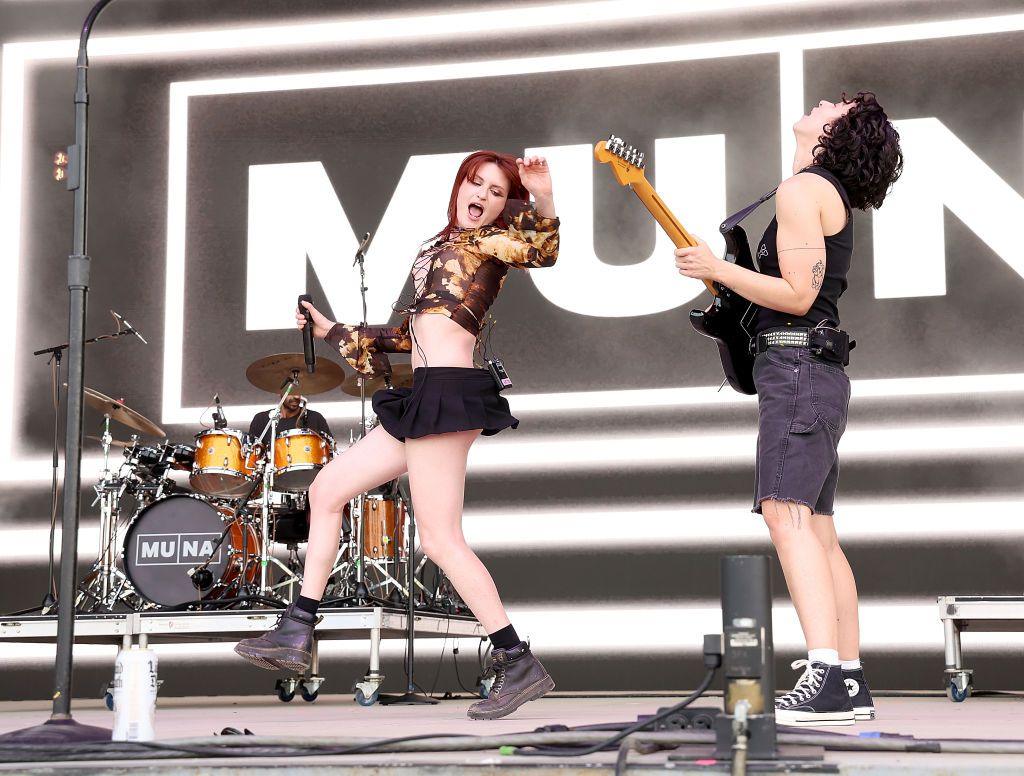 Image source, Getty Images
The band are best seen live: "We were super lucky to hit at the right time to be able to play tiny venues and work our way up to where we are now," says McPherson
The standout, lyrically speaking, is Big Stick. A critique of American imperialism, it's written from the perspective of Big Brother, who "can make you want anything that I want you to" – from war in Gaza to the militarisation of US police forces.
"And If you've got a problem with it, you could end up in jail," Gavin seethes as militaristic synths patrol the beat.
"I think sometimes people want to go to concerts to feel a brief reprieve from the horrors of the world around them, but right now the horrors are so pervasive that what I found myself wanting was a container to express my anger together with other people," says the singer.
"It's an emotional release that I think we are often denied because we have to read tragedies in the news every day and then keep our heads down and work."
Given the polarised state of political discourse in the US, did they have any misgivings about releasing the song?
"Maybe this is actually stupid, but I don't think it was a big decision for us," says Maskin.
"We have always been a political band, and we've always been super open with what we believe in, so it really wasn't a question."
Elsewhere, the album transports the listener to sweaty, laser-lit nightclubs, where unyielding rhythms fuel feelings of "horniness and heartache".
The title track is full of thwarted desire, as Gavin tries and fails to get the attention of a girl who constantly leaves her dangling. Wannabeher, meanwhile, is a sticky, sleazy track about being so completely besotted with someone that you start to blur the boundaries between where your personality ends and theirs begins.
"I think that's a canon gay experience, where you don't know whether you want to be with someone or you actually want to be them," laughs Maskin.
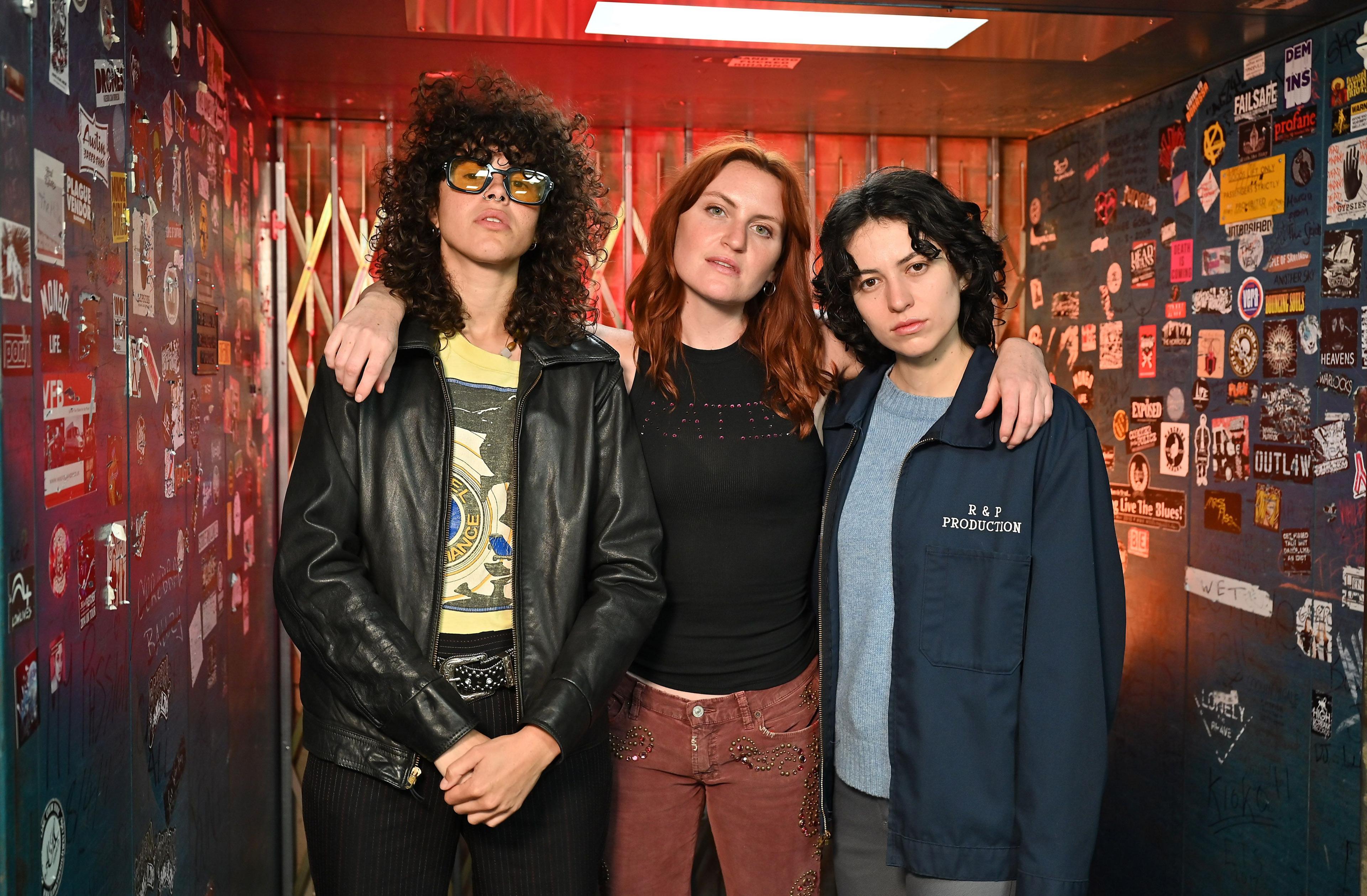
The band formed at university in 2013, with McPherson producing all of their music
Eastside Girls, meanwhile, is a tender depiction of Muna's neighbourhood, lovingly lampooning the staples of LA hipster culture – astrology, polyamory, roommate dramas and "negronis with the nice gin".
"It's a city that's run by sunshine," says McPherson, who moved to LA from her native San Diego.
"It's bohemian but it's also populated by some of the richest people in the world. It's a strange dichotomy."
The song's chorus is a masterclass in melody and, in Maskin's words, "smacks you in the face". It takes its place among Muna's most irresistible hooks (see also, Number One Fan, Stayaway, What I Want) – which all stem from Gavin's love of classic pop.
"She's been writing songs since she was eight years old, so it's a well-honed skill," says McPherson.
"I think it's a benefit of my obsessive personality, honestly," says Gavin.
"I am constantly searching for the next big chorus, and will probably always be. Also, once I have a seed in my head for a song that feels promising, it really has a hold on me and won't let me go until I feel I've done it justice." (Wannabeher, McPherson reveals, is the final version of a song that began 11 years ago.)
"I will say," Gavin adds, "one random tip is writing in motion - walking, driving, rollerblading, anything like that."
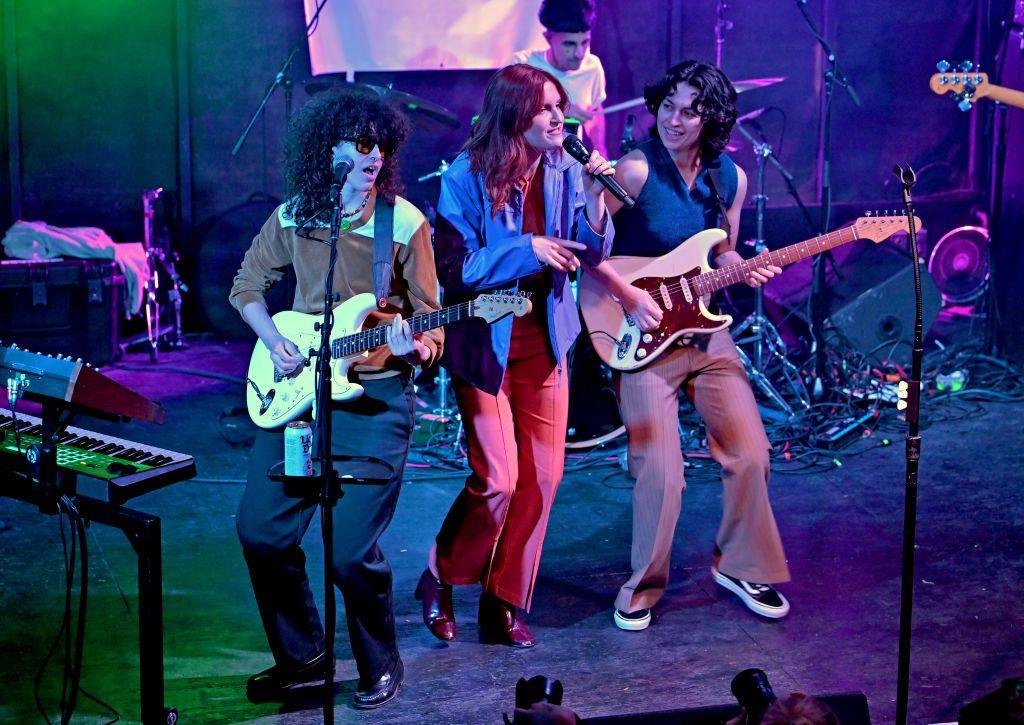 Image source, Getty Images
Muna's tour hits the UK this November, in their biggest venues to date
That explains why Muna's music always feels propulsive. "If you're not sweating after the first song, come on," laughs McPherson.
With an ever-growing fanbase, they'll play their biggest ever tour this autumn, titled the Gets So Hot Tour after the album's opening track – although the band previously joked it would be called "The Midwest Princess, Midnight Sun and the Eras Tour as Well", before abandoning the idea for copyright reasons.
A decade into their career, they're playing to "crowds we could never have imagined", while witnessing the genre labelled as "queer pop" expand into the mainstream, with artists like Chappell Roan, Renée Rapp, Lil Nas X and Troye Sivan all achieving crossover success.
"I do feel we were at the cusp of the reclamation of the word 'queer'," says Maskin.
"To us, it's actually a celebratory term, because it's inclusive, it includes everybody in the LGBTQI+ community.
"It came from academia first, the idea of queer theory," says McPherson, who admits the band were initially divided on whether to be open about their sexuality.
"We were reticent to come out of the closet in the hipster Pitchfork era of 2010 and 2011. We wanted to be mysterious and be closeted, and Katie was the one who encouraged us not to, and to just be ourselves. And we've only become more ourselves."
Even so, the label can be restrictive. Muna want their music to be universal.
"The subject matter we write about is queer in its essence, and so are our life experiences," says McPherson.
"The issue that we struggle with is wanting that to also be accepted as just a human experience, as well – especially in these times of great repression."
If anyone can do it, Muna can. Just don't let them play for your pets.



 English (US) ·