
 2 months ago
62
2 months ago
62
ARTICLE AD BOX

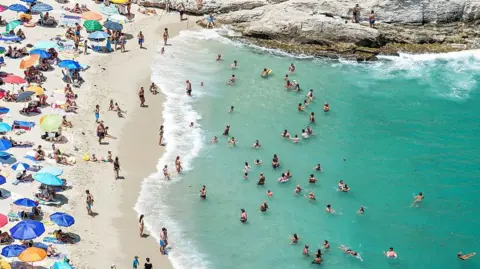 Getty Images
Europe's leading travel operator Tui has seen a 10% fall in revenue from summer holiday bookings made by UK customers, who have become more cautious due to the Iran war.
Overall, it noted a shift in demand from Eastern to Western Mediterranean destinations, with customers also booking trips closer to departure dates.
Tui is cutting the number of seats it purchases from its airline partners by 4-5% over the summer, while maintaining its own flying programme at current levels.
While it is reducing seats, chief executive Sebastien Ebel said he does not expect jet fuel shortages over the coming weeks, Reuters news agency reported.
There have been concerns that unless the Strait of Hormuz - a key route for oil and liquefied natural gas - reopens soon, there could be physical shortages in some areas in the coming months.
The strait's effective closure has pushed up the price of jet fuel and some airlines have responded by increasing ticket prices, while others have trimmed capacity in a bid to attract hesitant customers.
In its results for the first three months of the year, Tui reported a €40m euro (£34.7m) hit to profits due to the US-Israel war with Iran, including from repatriation and welfare costs and lost income.
The company reported an underlying loss before interest and tax of €188m for the quarter - an improvement from the €207m loss last year.
Overall Tui reported an overall 7% fall in revenue from bookings for this summer compared with last year.
Russ Mould, investment director at AJ Bell, said while the holiday and airline industry "is at pains to stress there are no current fuel shortages....consumers are getting jittery".
"There needs to be greater clarity on alternative sources of fuel to the Middle East before the public feels convinced to hit the buy button for their summer holiday."
Aarin Chiekrie, equity analyst at Hargreaves Lansdown, said consumers "have understandably become more cautious about splashing out on a holiday".
"Despite this, it doesn't appear that holidaymakers are abandoning their vacation plans completely.
"Recent data suggests they're simply leaving it until later to book. And while that's not ideal, it's better than complete demand destruction."







 English (US) ·