
 4 months ago
67
4 months ago
67
ARTICLE AD BOX
Dearbail JordanBusiness reporter

 EPA
EPA
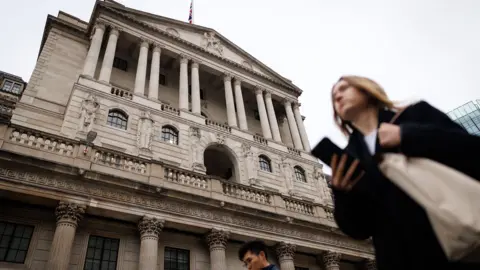
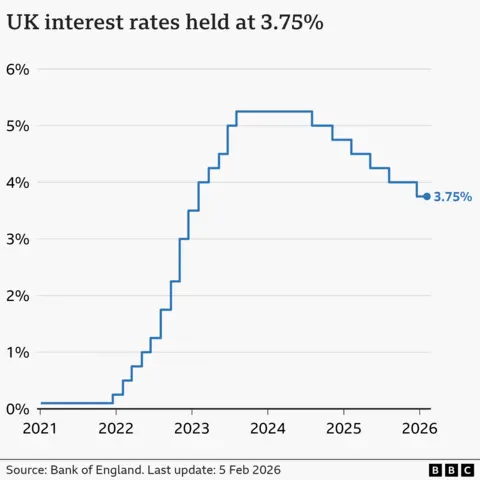
The Bank of England has held interest rates at 3.75% after a knife-edge vote but has opened the door to cuts later this year.
Borrowing costs were widely expected to be unchanged after the Bank reduced them from 4% in December.
Bank of England governor Andrew Bailey reiterated his forecast that inflation – which measures the pace of price growth - would fall close to the Bank's 2% target from April onwards, against a previous expectation it would hit that level in 2027.
"That's good news," said Bailey. "We need to make sure that inflation stays there. All going well, there should be scope for some further reduction in [the] Bank Rate this year."
The Bank said policies announced in the Budget, such as cuts to household energy bills, as well as lower wholesale gas prices were expected to ease inflation.
However, the Bank cut its forecast for UK economic growth in 2026 – from the 1.2% growth it forecast last November to 0.9%. The unemployment rate is also expected to tick higher this year, according to the Bank, up from an initial forecast of 5% to 5.3%.
The decision to hold interest rates this month was a close call, with four of the Bank's nine-member committee voting for a quarter point cut which would have taken borrowing costs to 3.5%.
Governor Bailey voted for a hold but said he could "see scope for some further easing of policy".
The 5-4 result tallies with Bailey's prediction in December that future decisions on interest rates will be a "closer call".
While inflation forecasts have improved, economic growth is expected to be lacklustre this year as the cost of living continues to affect households and those who have spare cash are choosing to save rather than spend.
Chancellor Rachel Reeves's decision to lift National Insurance Contributions for employers as well as increasing the minimum wage also continues to weigh on businesses and the jobs market.
Firms who spoke to Bank of England agents across the UK indicated that instead of passing on the higher cost of employment to customers by raising prices, they have reduced jobs or taken a hit to their profit.
While there have been redundancies, there was more evidence that companies are simply not hiring and a recent rise in unemployment "has been concentrated among the youngest age groups".
Looking ahead, businesses told the Bank they believed that food price inflation "has peaked". Prices for goods such as cocoa and cattle rose sharply last year but companies and producers said these have since fallen from recent highs.





 English (US) ·