
 4 months ago
76
4 months ago
76
ARTICLE AD BOX
Jemma CrewBusiness reporter

 PA Media
The government has set a target for the UK make half of the steel it uses and has announced higher taxes on buying steel from overseas.
Imported steel quotas will be lowered and anything brought in above that level will be subject to a new 50% tariff, the business department said.
The UK steel industry, which has been calling on the government to shield it from cheaper steel made abroad, welcomed the measures.
The Conservatives said the tariff "red tape" would hurt economic growth.
The government has not set a timeframe for its production target of up to 50% to be met.
It said from July quotas on imported steel would be "significantly reduced" by 60% from current arrangements, but did not give further detail.
The government is looking into a "transitional approach" where its 50% tariff would not apply to goods under contracts agreed before 14 March and imported between July and September.
Tariffs are taxes on imported goods paid by the firm bringing in the foreign product and the charge is typically a percentage of the good's value.
Firms may pass some or all of the extra cost on to their customers, which in this case means UK consumers and other UK businesses. Companies may also decide to import fewer goods.
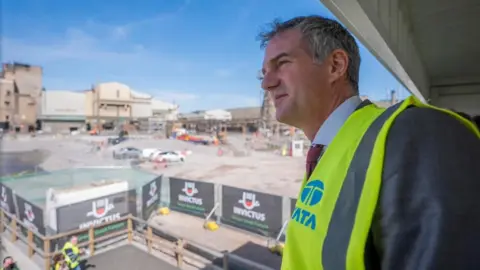
The government's steel measures were announced by Business Secretary Peter Kyle in Port Talbot, in Wales, where steel maker Tata is building an electric arc furnace which will make steel by melting scrap metal.
Kyle denied the new tariffs were a protectionist measure that would push up prices for manufacturers who use foreign steel and their customers.
"I'm announcing really ambitious targets for use of British steel in the British economy, from 30% to 50%," he told the BBC.
"But also, I need to defend the sector from anti-competitive behaviour from elsewhere in the world."
The government said its plans were not about stopping steel trade and that imports would continue.
It said the quotas had been designed in a way that would maintain supply of steel and minimise impacts on the wider economy.
However, shadow business secretary Andrew Griffith said: "Raising the cost of imported steel means more cost for the construction industry, less infrastructure investment, and is a further blow to the diminishing number of firms making things in the UK."
The UK's steel industry has faced major financial difficulties in recent years due to high energy prices, increased tariffs and a glut of steel globally.
Despite recent measures to cut energy costs for intensive users, UK steel makers still face higher bills than their European and US rivals.
While most producers have bought their energy months in advance, surging energy costs remain a significant future threat, with fears the US-Israel war with Iran could cause prolonged disruption to supplies and a sustained spike in prices.
The government has a strong incentive to make UK steel attractive as it is in effective control of steel works in Scunthorpe and Rotherham which would have otherwise collapsed.
It is currently spending millions keeping furnaces burning at both sites.
Gareth Stace, director general of UK Steel, said for too long the UK had lacked a coherent plan for steel, which he said "underpins our national security, our energy transition, and the delivery of critical infrastructure".
"This is a crucial moment: with global markets distorted by overcapacity and subsidy, a clear and ambitious domestic strategy is exactly what is required to ensure steelmaking not only survives in the UK but thrives."
The GMB union welcomed the announcement, but said it was waiting for detail, adding "questions around ownership of Scunthorpe and the future technology mix will be key to our members and their livelihoods".
Additional reporting by Daniel Davies.





 English (US) ·