
 4 months ago
84
4 months ago
84
ARTICLE AD BOX
Thomas Berringtonand Jonny Humphries,North West

 Thomas Berrington/BBC
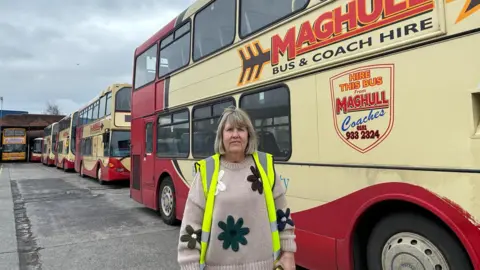
Ann Meek said it was becoming increasingly difficult to stay afloat
"Last year it was national insurance, now it's the fuel and you get to a point where you think how long can we keep this going for."
Those are the words of Ann Meek, director of Maghull Coaches in Merseyside, in the wake of a week of punishing fuel cost rises linked to the war in Iran.
Since the US and Israel launched air-strikes on the Iranian capital Tehran on 28 February, the price of oil has rocketed, causing sharp rises in the cost of petrol and diesel.
Meek said her family run business, which was founded around 1970, had been particularly hard hit.
She said: "The prices, I was looking, since this time last month, they've probably gone up about 9p or 10p a litre.
"Some of these vehicles, the big ones, they're only doing about seven or eight miles a gallon."
 Thomas Berrington/BBC
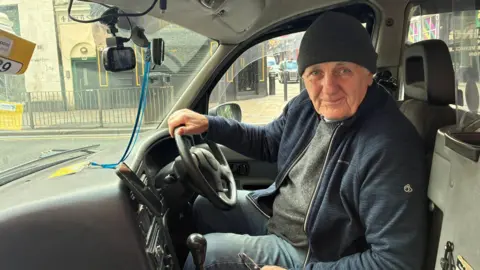
Arthur Grimes said fuel costs had "gone up like a rocket and come down like a feather"
Maghull Coaches has agreements to provide City Explorer open top bus tours as well as a Beatles Tour - and sets its prices at the beginning of the season.
Meek said much of the company's other business comes from school contracts, with much of the cost pre-agreed.
"It's a very tricky conversation because at the moment everything is just going up," she said.
"Everything the government seems to do, you're going to have to put your prices up, and your staff want more money, but you get to a stage where you can't charge enough, really, to cover everything.
"This industry is very, very tight, especially the type of work we do, because we're aware that most of our customers are on a limited budget anyway."
Cab driver Arthur Grimes told the BBC he and his colleagues were also struggling with fuel prices.
"It goes up like a rock, it comes down like a feather," he said.
"It's been going on for years. This is not new, is it? Diesel should be cheaper than petrol, anyway, because it's easier to refine."
He described the fuel market generally as a "rip off".
The Petrol Retailers Association (PRA) met with ministers in Number 11 Downing Street earlier - a meeting the industry body had threatened to scrap due to what it called "inflammatory language" from politicians.
Chancellor Rachel Reeves told retailers they had a "shared obligation" to keep prices down for motorists.
Energy Secretary Ed Miliband added: "We won't tolerate unfair practices either here or anywhere else in the industry."
After the meeting, Gordon Balmer, of the PRA, said: "We engaged in constructive discussion with the government on this, and we are working collaboratively with them."



 English (US) ·