
 1 month ago
56
1 month ago
56
ARTICLE AD BOX
19 minutes ago
Dave HarveyWest of England business and environment correspondent

 BBC
BBC
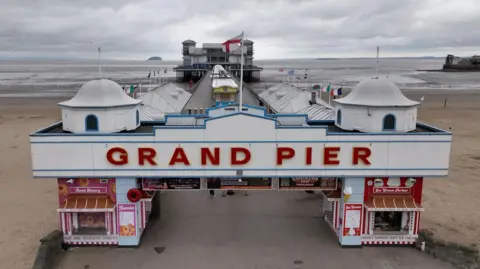
Weston-super-Mare's famous Grand Pier has seen fewer visitors as people spend more on essentials
First it was the farmers and lorry drivers who noticed the impact of war in Iran.
Now a medieval palace and a seaside pier have been hit as people cut back on day trips to save money for fuel.
Bookings in Somerset's tourism attractions have halved, according to Visit Somerset, who warned the impact could be "seismic".
John Turner, chief executive of Visit Somerset, said he worried "we will see B&Bs, even hotels, collapse into administration".
In the Forest of Dean, Gloucestershire, numbers have fallen so fast that one museum decided to cut admission costs entirely in a brave bid for survival.
As the price of fuel and essentials stays high, it seems people are getting pickier about spending money on a day out.
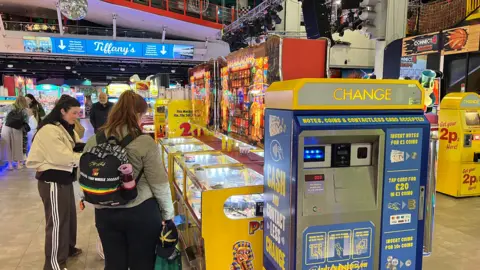
Visitors to the Pier spend, on average, less than £15 a head
If you're counting the pennies, the famous Grand Pier in Weston-super-Mare is a magnet.
The penny-pusher machines in the hall of arcade games take just 2p.
"Two pounds will keep the kids entertained for an hour," smiles Michelle Michael, the Grand Pier's boss.
Her family pride themselves on offering a "value" day out. Admission is £2, and a typical visitor spends under £15 a trip.
Yet even here they have noticed a dip. Easter numbers were down 6% on last year.
"People are more cautious, yes," Michelle observes.
"Everyone is noticing people are holding onto their money. The resort is down, the town is down, much like tourism destinations across the country."
Playing the 2p pushers, I meet John and Sue, a couple down on a coach trip from the Midlands.
"Yes, everything's gone up", agrees Sue.
"Cinemas, restaurants, petrol of course. We don't go out as much as we used to, just can't afford it."
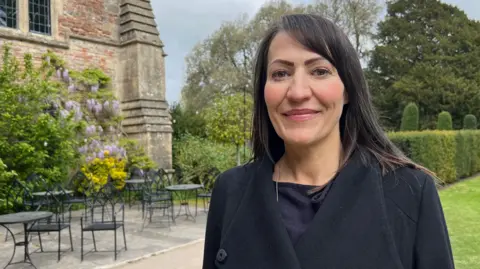
"People are still coming, just not as many," says Merryn Kidd, CEO of the Bishop's Palace, Wells
A short drive across the Mendips, I pop in to a very different day out.
The Bishop's Palace at Wells has been here since the 13th Century, and boasts spectacular gardens alongside ancient ruins.
Admission is £15 for adults, or £25 for the popular annual pass.
They too saw a dip this year, with Easter about 10% down on 2025.
"People are still coming out," said Merryn Kidd, the CEO of the Bishop's Palace, "just not quite as many".
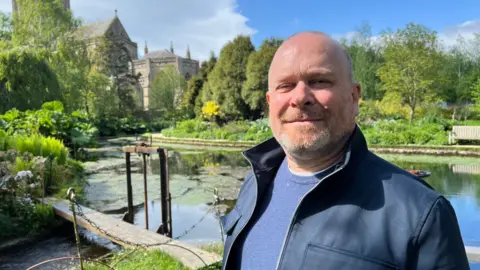
John Turner says 50% of Somerset's tourism firms have seen booking down on 2025
Strolling alongside the beautiful Well Pools, which gave the city its name, I asked John Turner from Visit Somerset how typical this is.
He has just completed a survey of Somerset's tourism businesses, comparing March 2026 to the previous year.
"50% say that numbers are significantly down on last year," he tells me.
"One in four have seen cancellations go up. It's a real concern."
He blames the rise in fuel and food prices, and a general feeling of uncertainty which "makes people cautious about spending".
"Tourism relies on people's disposable income," he explains.
"When disposable income falls, our businesses suffer. And right now, people have a lot less disposable income."
So what are they doing about it?
Free face painting is one idea. On the Grand Pier, they know a £2 turnstile and 2p amusements can still be too much for some. So on weekends and school holidays, they are throwing in a free train ride and face painting for the kids.
In Wells, they tried a radical idea. Free admission - for one day only.
Their first open day was a hit, attracting over 5,000 visitors, twice the previous daily record.
"It just shows people do want to come and see wonderful heritage sites like ours, and beautiful gardens," Merryn insists, "but cost is putting them off."
They still took plenty of money that day, through the cafe and gift shop, but so far there are no plans to cut ticket prices permanently.
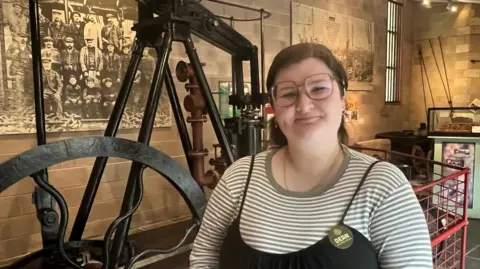
Making admission to the Dean Heritage Centre free has been a great success, said Abbie Stewart
Tucked away in the Forest of Dean, though, I find a small museum with big ideas.
The Dean Heritage Centre is home to beam engines and cider presses, and a detailed display charting the history of the areas iconic free miners.
But over the years since Covid, numbers through the door had been gradually dwindling. This year, the museum decided to cut admission prices to zero, and ask for donations.
Marketing officer Abbie Stewart remembers waking full of anxiety, the day they opened the doors for free.
"I remember seeing the queues at one minute past ten, people queuing up to get in. It was just really nice to see the community come together and get excited about it as well."
People have continued to come, families drawn by the Gruffalo Trail they have made in the forest, with carved wooden figures from the famous children's story.
"And people have made donations, on average about £5 a family, and they're spending lots more in the cafe, which is great," adds Stewart.
Mark Terry-Lush, chair of Forest of Dean Tourism, sees the Dean Heritage Centre's "brave move" as typical of the innovation in the industry.
"People are more cautious about spending money, so we're seeing tourism businesses react by cutting prices, improving their cafes. It's great that they've opened this up to the local people by making it free."
But clearly, not every museum, palace or seaside pier can just throw open the doors for nothing. John Turner, from Visit Somerset, is worried about the impact of the economic squeeze on the industry as a whole.
Over 18,000 people work in tourism in Somerset alone, he points out, the sector is worth £1.1bn a year. If the reduction in spending continues at just 10%, the effect could be serious.
"We will see B&Bs and hotels collapse," he says.
"We're looking at around 200-300 jobs going as a result of this. That's a lot of people out of work."
From piers to palaces, tourist attractions are getting creative to lure in the trippers. But they want help from government too. Industry leaders are calling on ministers to consider cutting VAT on tourism and hospitality as they did during covid to help them survive.


 English (US) ·